 |
 |


Method from University of Bristol functions well against strong solar background.
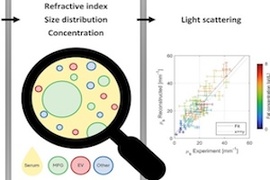
Light-scattering data give insights into milk composition.

Metasurface-based approach offers scalability for diverse applications and mass manufacture.
Offers potential to improve nanotechnology and power nuclear clocks.
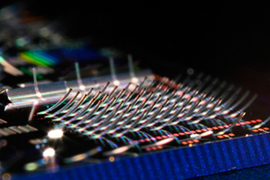
Photonic device that curls beam off chip surface could advance displays, communications, quantum computing.
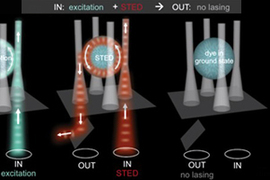
Researchers demonstrate nanosecond optical switching using a dye-doped droplet that redirects stored energy without electrical input.

Raman has significant potential for assessing stability of mRNA vaccines.
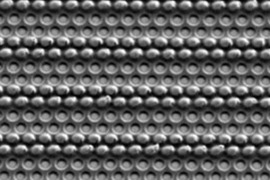
Scalable nanostructures based on photonic crystals reflect propulsive laser light, while cutting heat and mass.
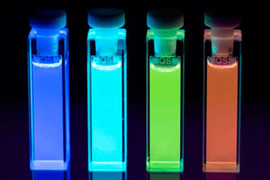
Chalmers-developed chemicals achieve higher resolution than 4-photon microscopy, even using 2-photon method.

Australian-developed air cavities help atom-thin semiconductors shine brighter.

UCL London project conducts 3D tree census to better understand biomass that forests contain.
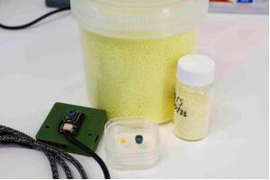
Development by Flinders University could cut need for costly lenses based on silicon and rare earths.
| © 2026 SPIE Europe |
|


