


UAlbany tests mRNA therapeutics with Raman spectroscopy
Raman has significant potential for assessing stability of mRNA vaccines.
10 March 2026
A project team from New York's University at Albany (UAlbany) has used Raman spectroscopy to monitor the stability of mRNA therapeutics.
Described in Analytical Chemistry the study points towards new ways to rapidly evaluate the integrity of mRNA vaccines, a key aspect of their clinical success.
mRNAs are typically unstable and require encapsulation in lipid nanoparticles (LNPs) for efficient delivery across cell membranes. Determining how much mRNA is encapsulated versus how much remains LNP-free is a critical factor in evaluating the efficiency of mRNA vaccine production, noted the UAlbany team.
Current methods used to analyze mRNA's packaging often require breaking apart vaccine samples, which is both destructive and time-consuming. A Raman-based alternative would be instantaneous, with the sample preserved for future testing.
"mRNA therapeutics have emerged as a powerful tool for treating a wide range of diseases, but their clinical success depends on overcoming issues of instability and delivery," said UAlbany chemist Igor Lednev.
"Raman spectroscopy offers us unique information that can help to ensure mRNA is fully encapsulated inside lipid nanoparticles, ensuring the safety and effectiveness of these therapeutics."
Advances in laser spectroscopy supporting modern medicine
Conventional Raman spectroscopy is often inhibited by autofluorescence from biomolecules, an issue UAlbany tackled by using deep-UV excitation at 200 to 280 nanometers, where fluorescence is largely avoided. Deep-UV excitation also facilitates a high signal-to-noise ratio in the resulting Raman spectra.
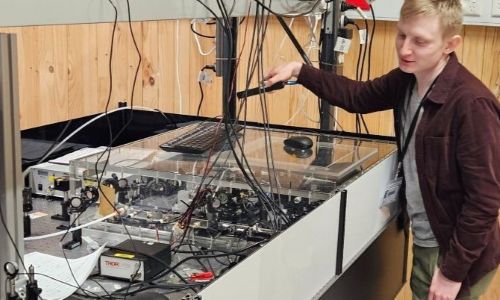
"We are using our homebuilt instrument to directly analyze mRNA molecules in vaccine samples," Lednev said. "Combining this with an advanced statistical analysis, we have created a quantitative method for ensuring the mRNA is properly protected in lipid nanoparticles."
Deep-UV resonance Raman (DUVRR) spectroscopy with excitation at 266 nanometers, matching the maximum UV absorption of mRNA, enables spectral differentiation of mRNA based on its degree of encapsulation, noted the project.
Specific vibrational modes are influenced by the interaction between mRNA and lipids, so identifying those spectral elements allows the mRNA to be classified as fully encapsulated, partially exposed or completely free. This approach provides a spectroscopic framework connecting fundamental molecular characterization with a practical assessment of therapeutic performance, noted the project in its paper.
Igor Lednev believes the Raman technique could eventually be used in quality control settings to evaluate mRNA therapeutics before release, as well as during the research and development stage.
"This is an example of how advances in laser spectroscopy can directly support modern medicine," Lednev said. "By better understanding how these therapeutics are formulated, we can help make them safer and more effective."
Advanced laser spectroscopy detects fake Covid vaccines
October 19 2023

Diffraqtion aims high with $10M for 'quantum' camera platform
September 01 2026