

Plus: Sivers Semi partners with Poet; and photonic chip foundry CCRAFT gets Innosuisse support.
Winners to be named at PW2026 from quantum, biophotonics, and laser sectors – plus Catalyst Award.
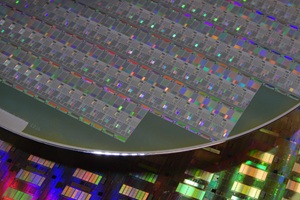
Photonics giant is now producing devices on 6-inch wafers at its Texas and Sweden fabs to meet unprecedented demand.
University of Tennessee project aims for fully insertable wireless robotic imaging device.
US Air Force provides Michigan with $2 million to enable orbiting satellites to share power and control by laser.
Photonics firm swings to a net profit as AI data center momentum continues.
| MBI Berlin and DESY present plasma lens that focuses attosecond pulses Opening up new opportunities for studying ultrafast electron dynamics. |
| IPG opens new US defense facility Customer center and production site in Huntsville, Alabama, will support 'Crossbow' counter-drone laser system. |
| Umeå and China group develop ‘random’ laser made from bio-materials Birch leaf and peanut kernel-based source could be a cheap, accessible tool for diagnostics and imaging. |
| imec breaks performance record in super-cooled thin-film strontium titanate Breakthrough in material engineering “accelerates the roadmap for quantum applications”. |
| Aalto University slows AMD progression with laser heating Energy from laser source triggers healing response at cellular level, if temperature is controlled. |
| Q.ANT raises another $18 M to drive its photonic AI infrastructure Duquesne Family Office cash makes Native Processing Server “one of Europe’s best-funded AI accelerator techs”. |
Hamamatsu Photonics Europe GmbH
Resolve Optics Ltd
ECOPTIK
Master Bond Inc.
![]() | Identifying Optical Materials with Precision Accuracy 04 Mar Knight Optical Precision accuracy is a critical necessity with any optical component. Rigorous testing to ensure strict compliance with given requirements will always be essential; it is a vitally important demand within any industry sector. Dimensional, surface profiling and optical performance testing are significant aspects of this process, but an additional layer of assurance and quality can be achieved with the use of material verification, employing methods such as refractive index, density testing and transmission measurement. This White Paper explores advanced techniques for precise optical material verification, overcoming the limitations of traditional testing methods. |
![]() | Choosing the best spectrometer for NIR OCT 02 Apr Wasatch Photonics Near infrared optical coherence tomography has traditionally been limited to imaging depths of just a few millimeters, but with our expanded line of OCT spectrometers, up to 12 mm is possible. In this tech note, we explore and compare three different drop-in spectrometer models designed to serve a wide range of resolution, depth, and size requirements in NIR OCT imaging. |
![]() | Harnessing Einstein’s Photoelectric Effect: Advancements in LiDAR Technology and Its Impact on Modern Sensors 26 Aug Hamamatsu Photonics Europe Hamamatsu Photonics is leading the evolution of LiDAR with advanced sensor technologies that enhance precision and reliability. Their Time-of-Flight systems, based on Einstein’s photoelectric effect, use rapid laser pulses and sophisticated detectors - Avalanche Photodiodes (APDs) and Silicon Photomultipliers (SiPMs) - to capture real-time distance data with exceptional accuracy. Optimized for thermal stability and energy efficiency, these sensors are ideal for autonomous vehicles, robotics, and smart devices. Hamamatsu’s continued innovation in APD and SiPM technologies is accelerating the integration of intelligent systems into everyday life. |
![]() | Surface Quality Control for Maximizing LIDT in High-PowerLaserOptics 06 Oct Optoman in collaboration with Dioptic In high-power laser systems, the optical components' resilience to laser-induced damage directly determines performance, reliability, and service life. Even minor surface or subsurface imperfections can severely compromise the laser-induced damage threshold (LIDT), introducing failure points that limit system capability. |
| © 2025 SPIE Europe |
|