


Laser fusion startup Inertia Enterprises raises $450M for pilot plant
Livermore company was co-founded by National Ignition Facility research leaders Annie Kritcher and Mike Dunne.
17 February 2026
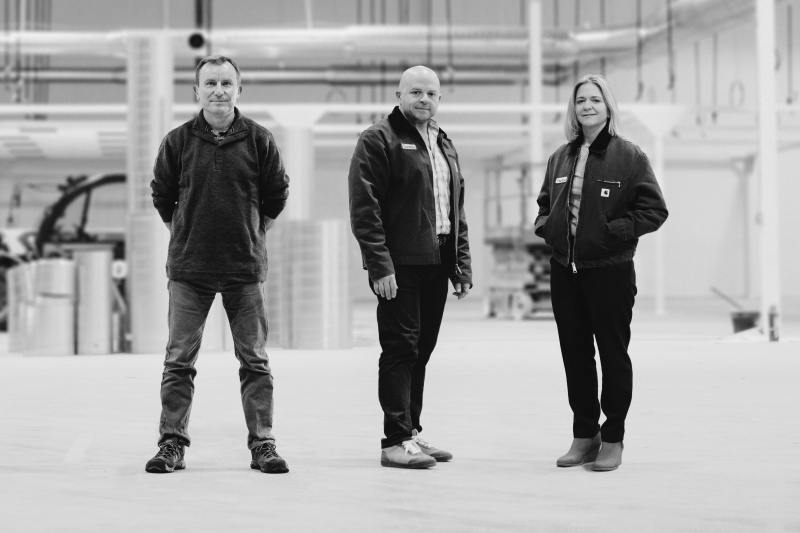
Inertia Enterprises, the US-based laser fusion startup company established by two pioneers of the technology from the National Ignition Facility (NIF), has closed a series A round of venture funding worth $450 million.
Led by Bessemer Venture Partners, the funding round will support construction of a pilot facility, and also included money from GV (Google Ventures), Modern Capital, Threshold Ventures, and others. Silicon Valley-headquartered Bessemer has previously backed the likes of Waymo, Pinterest, and LinkedIn, and in a blog post stated:
“Inertia…represents our first investment into the direct fusion market, being the first company on the roadmap that has compelled us to act.
“Inertia's approach is distinct in the fusion landscape, and its architecture is designed to scale the NIF's success through engineering and manufacturing innovation. The company will work closely with Lawrence Livermore National Laboratory (LLNL) on target design, fabrication, and laser technology.”
Clear plan
Inertia’s technological approach draws a direct line from the successful demonstration of laser-driven fusion with energy gain using the 192-beam NIF experimental setup, with the firm looking to bring that scheme up to date by using thousands of more compact and, crucially, much more efficient lasers.
Co-founders Mike Dunne and Annie Kritcher both played key roles at NIF in recent years, and they are joined by CEO Jeff Lawson, who has previously worked closely with the Bessemer team with their investment in cloud communications firm Twilio.
“Inertia is building on decades of science and billions of dollars invested to reach the ignition milestone that proved the science,” said Lawson in a statement announcing the $450 million funding.
“Our plan is clear: build on proven science to develop the technology and supply chain required to deliver the world’s highest average power laser, the first fusion target assembly plant, and the first gigawatt, utility-scale fusion power plant to the grid.
“Inertia is building the team, partnerships, and capabilities to make this real within the next decade.”

‘Grid scale’
Dunne, who was previously director of the UK’s Central Laser Facility before leading a five-year program at LLNL to create an industry-validated power plant design based on the NIF approach, also discussed the Inertia plan in an invited presentation at last month’s SPIE Photonics West conference on laser fusion.
“For the first time, the fusion industry is seeing the alignment of three elements crucial to commercialization: proven physics, public sector partnerships, and private sector investment at the scale needed to deliver,” he said.
“It’s our job to capitalize on these elements to build fusion energy that works at grid scale.”
Dunne’s Photonics West presentation indicated that the ultimate laser system design for a commercial Inertia facility called for 10 megajoule output pulses provided by between 1000 and 4000 individual beamlines, pointed at a hohlraum target.
That approach is expected to minimize the aperture of the required optics, thus enabling more straightforward solutions for gain media, bandwidth control, and nonlinear optics
In the meantime the plan for the pilot facility is to deliver a full-scale “unit cell” beamline producing 10 kilojoule pulses at a repetition rate of 10 Hz and with 10 per cent wallplug efficiency.
The project is intended to develop and demonstrate the performance of the laser architecture, establish the required supply chain for scaling to cost-effective, high-volume delivery of a multi-megajoule laser, and deliver a world-leading laser platform for use by the wider fusion/plasma user community.
Dunne also called for engagement of the international laser industry and academic community in delivering the system.
'Thunderwall' laser design
Kritcher, the lead designer of fusion experiments at NIF from 2017, pioneered the development of the “Hybrid-E” inertial confinement fusion integrated physics design - including the hohlraum, capsule, and laser specifications and experimental setup.
In December 2022, that design delivered the first controlled fusion experiment to achieve net target energy gain, with Kritcher subsequently allowed to co-found Inertia and act as its chief scientist while continuing to work at LLNL.
“In just three years, we’ve gone from the first experiment to ever produce more fusion energy than was delivered to the target, to repeating that result many times and pushing the target gain higher,” she said.
“We’re now focused on translating physics we know works into a pathway toward commercial-scale fusion energy, and the real benefits it can deliver for people and the planet.”
Dubbed “Thunderwall”, the unit cell laser system outlined by Dunne at Photonics West is tipped by the startup to become “the world’s first grid-scale fusion laser beamline”, and is expected to produce 50 times higher average power than any prior laser of its type.
Coupled with mass production of targets based on Kritcher's breakthrough design and a system that can feed those targets into chambers hit by the lasers in fractions of a second, Inertia’s long-term goal is to design and build a commercially viable, grid-scale fusion power plant.
Diffraqtion aims high with $10M for 'quantum' camera platform
September 01 2026