 |

24 Feb 2026
Light-based device uses quantum dots to spot ultra-low biomarker levels.
A project at China's Shenzhen University has developed a new sensing platform for the detection of biomakers in blood.Described in Optica, the device "paves the way for next-generation diagnostic platforms," according to the researchers.
Detecting biomolecules at ultralow concentrations remains a fundamental challenge in optical biosensing because of the weak light-matter interactions governing signal generation, noted the Shenzhen team in its paper.
One answer lies in nonlinear optics, which can enhance the faint optical responses through second-harmonic generation (SHG) and other complex behaviors occurring at nanostructured surfaces.
Quantum dots made from CdTe/ZnS are attractive tools for this purpose, potentially able to efficiently transfer multiphoton-excited energy to the nanostructured surface and produce significant signal amplification. But applying this principle in biosensing applications has remained challenging.
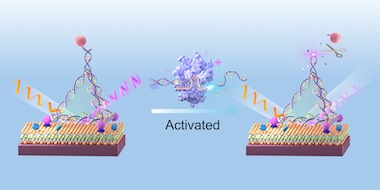
The Shenzhen project developed a bioinspired architecture in which DNA tetrahedrons - self-assembled, pyramid-like nanostructures made from DNA - are used to tether quantum dots at precise distances from a molybdenum disulfide surface. The quantum dots then enhance the local optical field created by irradiation, strengthening the SHG signal when light interacts with a biomarker molecule in a blood sample.
"Our sensor combines nanostructures made of DNA with quantum dots and CRISPR gene editing technology, to detect faint biomarker signals using second harmonic generation," said team leader Han Zhang from Shenzhen University.
"Instead of viewing DNA only as a biological substance, we use it as programmable building blocks, allowing us to assemble the components of our sensor with nanometer-level precision."
A portable bedside device for clinical use
In trials, the new sensor was applied to the detection of fluorescence from miR-21, a microRNA biomarker associated with lung cancer. Results showed that SHG signals could be boosted by a factor of 124. The design also acts as a switch, with the particular Cas12a protein used for CRISPR cutting the DNA holding the quantum dots when the biomarker is detected, causing a subsequent drop in SHG signal as further evidence of the biomarker's presence.
Because the SHG signal has minimal background noise, even very low concentrations of biomarkers can be detected, with the team's integrated material-biology design achieving "unprecedented detection limits of 168 zM for microRNAs, representing an improvement of over six orders of magnitude compared to conventional optical biosensors," noted the project.
The sensor was also highly specific, ignoring other similar RNA strands and detecting only the lung cancer-related target.
The project's next steps will include work on miniaturizing the optical setup, with the goal of turning the technology into a portable device that could be used at the bedside, in clinics or even in low-resource remote locations.
"By combining optical nonlinear sensing, which effectively minimizes background noise, with an amplification-free design, our method offers a distinct balance of speed and precision," said Han Zhang. "If successful, this approach could help make disease treatments simpler, potentially improve survival rates and lower overall healthcare costs."
 |  |  |  |  |  |  |
| © 2026 SPIE Europe |
|