


Autofluorescence plus AI evaluates colorectal cancer in real time
Champalimaud Foundation lifetime imaging method offers minimally invasive route to diagnosis.
02 September 2025 Research & Development
 Colorectal cancer (CRC) is one of the most common and deadly forms of cancer worldwide, often going undetected until it reaches an advanced stage.
Several optical technologies have been brought to bear on diagnosis, including the multimodal platform designed by the European PROSCOPE project combining OCT with multi-photon microscopy and Raman spectroscopy.
But despite modern colonoscopy greatly improving the early detection of precancerous lesions, determining which lesions are likely to become cancerous remains a challenge, especially during the procedure itself.
A project at Portugal's Champalimaud Foundation biomedical research center has now developed an AI-assisted autofluoresence lifetime imaging technique to more easily differentiate benign and malignant colorectal lesions.
Described in Biophotonics Discovery, the study demonstrates the potential of multispectral autofluorescence lifetime imaging combined with ensemble learning.
"Advancements in endoscopic assessment have improved CRC prevention, early detection, and surveillance over the years," noted the project in its paper. "Yet, CRC remains one of the most significant health challenges of the 21st century."
Spectroscopic data beyond tissue identification
Previous work at Champalimaud suggested that autofluorescence lifetime measurements can provide substantial diagnostic information beyond the classification of benign and malignant tissues, and that AI systems could accelerate this procedure. Significant hurdles to clinical implementation remained, however, not least associated with the accuracy of the optical data.
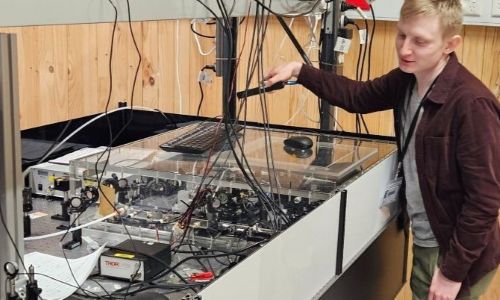
The project's latest instrumental platform isolates the autofluorescence from key endogenous fluorophores centered around 380, 472 and 525 nanometers, chosen to excite various molecules of interest including collagen and cellular coenzymes. Fluorescence lifetime data is collected via time-correlated single photon counting (TCSPC) acquisition.
"A key feature of this system is the ability to record TCSPC autofluorescence lifetime data in bright conditions, owing to the synchronization of the fluorescence acquisition with an external light source providing periodic white illumination to the sample at 50 Hz," noted the team.
In trials using tissue samples from 117 colorectal surgery patients, each specimen was scanned using a fiber-optic probe and a dual-laser autofluorescence lifetime system, tracking how each type of tissue responded to the light over time. These measurements were matched to pathology diagnoses to serve as training data for an AI-based classification model, identifying patterns in the spectroscopic data that correspond to benign or cancerous tissue.
When the trained system was then applied to fresh tissue samples it performed with 85 percent accuracy, 85 percent sensitivity, and 85 percent specificity, meaning that it could identify cancerous tissues with high reliability based only on their autofluorescence signatures.
Even when applied to individual measurement points rather than larger tissue regions, the model generated useful probability maps that highlighted tumor areas, according to the team, suggesting the technology could help doctors carrying out colonoscopy or surgery to decide where to focus their attention.
"It is overly simplistic to view optical spectroscopic techniques solely as tools for identifying cancerous tissues," noted the Champalimaud project in its paper. "These systems offer a significant advantage by harnessing spectroscopic data, offering insights that extend beyond mere tissue classification and can potentially offer clues regarding oncological outcomes and response to therapy."
Diffraqtion aims high with $10M for 'quantum' camera platform
September 01 2026