


Boston University tracks water dynamics during hemodialysis
Hybrid near-IR method monitors optical properties as a new route to patient care.
11 February 2026
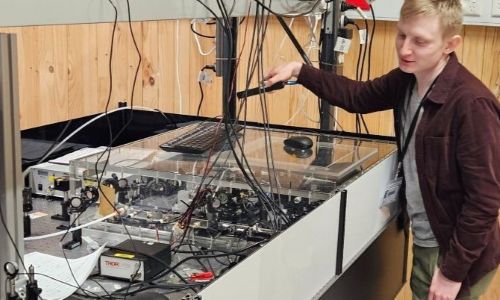
Boston University has developed a new optical system designed to monitor water dynamics during hemodialysis.
Described in Biophotonics Discovery, the platform should help reveal early physiological markers that distinguish patients at risk of complications during the procedure.
Achieving an optimal fluid balance during a hemodialysis procedure and determining how much fluid to remove during treatment without tipping a patient into dangerous instability remains one of the most challenging aspects of clinical management for patients with chronic kidney disease (CKD), according to the project.
Removing too little fluid is a risk factor for cardiovascular and all-cause mortality in CKD patients, while excess fluid removal causes drops in blood pressure, muscle cramps, and perhaps a premature termination of the hemodialysis session, compromising patients long-term vitality.
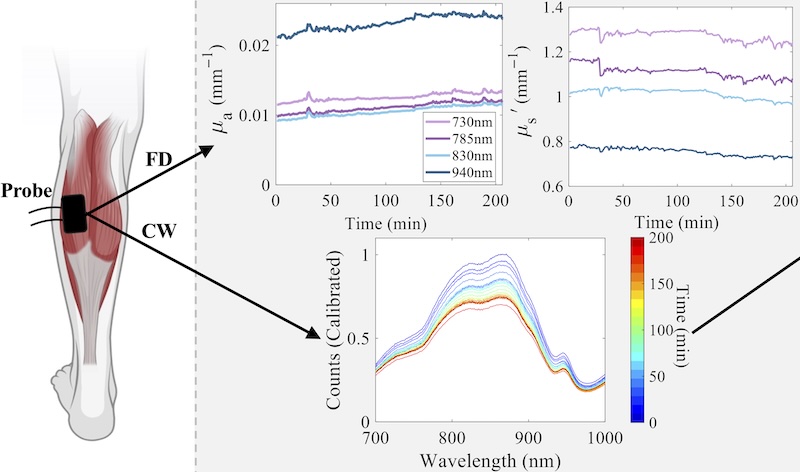
Boston University's solution involves a custom-built platform combining frequency domain (FD) and broadband continuous wave (CW) near-IR spectroscopy, designed to overcome the trade-off between quantitative accuracy and broad spectral range in existing FD or CW devices.
The FD light component measures absolute absorption and scattering at specific wavelengths, and when combined with the broadband CW measurements, the amounts of water, lipids, and hemoglobin can be quantified in tissue.
"To our knowledge, no previous studies have utilized a combined FD and CW near-IR spectroscopy system for continuous monitoring of tissue optical properties during hemodialysis," commented the Boston team in its published paper. "Nor have they evaluated such measurements in the context of categorizing adverse clinical outcomes."
Water ratio points to at-risk patients
In an initial proof-of-concept clinical trial on 27 participants, the new probe was applied to the calf muscle while patients continued their dialysis as usual.
The device recorded continuous optical data of absorption changes linked to hemoglobin and water; scattering changes linked to tissue composition and hydration; and derived quantities such as oxygen saturation and water‑to‑lipid ratio. Researchers logged any signs of trouble including cramping, dizziness, vomiting, headache, shortness of breath, or hypotension, and tagged these events in the data stream.
Crucially the project identified the water ratio, defined as the water content divided by the total water and lipids content, as a key indicator.
Patients who remained stable during treatment tended to show a gradual decrease in water ratio, consistent with effective ultrafiltration and normal tissue‑to‑blood water exchange. Patients who experienced adverse events showed little decrease, or even slight increases, in this ratio.
The researchers also found that changes in the scattering amplitude, a parameter describing how light interacts with tissue structure, differed between groups. Patients who remained stable tended to show distinct patterns in scattering compared to those who became unstable. This aligns with earlier work showing that tissue scattering decreases as hydration increases.
"These findings support the potential for a noninvasive optical metric for improving patient monitoring," said the Boston team.
ICFO diffuse optics improves blood transfusion monitoring
February 05 2025

Diffraqtion aims high with $10M for 'quantum' camera platform
September 01 2026