 |

30 Jul 2025
Xi'an Jiaotong-Liverpool University develops noninvasive technique to image stents through skin.
Stents are widely used to manage the narrowing of blood vessels and ducts, but monitoring the long-term condition of the stents after implantation is critically important.Although laser-machined patterns on the surfaces of the stents themselves have recently improved their cellular adhesion, it remains vital for clinicians to be aware of damage or wear to the stents before failure occurs.
Current monitoring tools using contrast agents or ionizing radiation are invasive for patients and not always effective.
A project at China's Xi’an Jiaotong–Liverpool University (XJTLU) has now developed a technique based on photoacoustic microscopy that could allow more effective stent monitoring, and published the results in Optics Letters.
"It is critical to monitor stents for problems such as fractures or improper positioning, but conventionally used techniques require invasive procedures or radiation exposure," said Myeongsu Seong from XJTLU.
"This inspired us to test the potential of using photoacoustic imaging for monitoring stents through the skin."
Use of photoacoustic techniques in a number of clinical applications continues to expand, thanks to their non-ionizing label-free nature and potential to reveal functional, metabolic, molecular and genetic information.
Although some previous studies have used photoacoustic imaging to image stents via an endoscope, this still requires surgical endoscopy and an invasive procedure. In the new study, XJTLU examined whether photoacoustic microscopy might enable noninvasive stent monitoring through the skin from outside instead.
Stents in shallow regions
The team employed acoustic-resolution photoacoustic microscopy (AR-PAM), a category of photoacoustic methods based on the technique's relatively less focused acoustic beam rather than the tightly focused excitation laser beam, creating imaging data at ultrasound resolution via focused transducers.
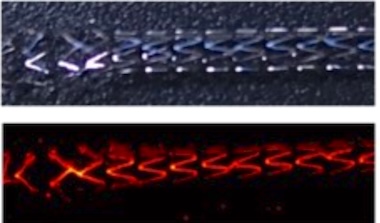
In proof of concept trials, the project mimicked different stent scenarios including fractures, compression and movement of overlapped stents. They also used butter to mimic deposition of plaque or blood clots after stenting. Using AR-PAM at wavelengths of 670 and 1210 nanometers, they were able to successfully image these various stent conditions through excised mouse skin.
"One of the most interesting results is that we could easily differentiate between the butter we used to mimic a lipid plaque and the stent," commented Seong. "Because plaque and stents absorb light differently, using two wavelengths helped us distinguish them."
While further optimization of the AR-PAM approach is now being studied, the project believes it has shown that a photoacoustic method may potentially be a noninvasive, label-free monitoring tool for stents located in a relatively shallow region, like the carotid artery or superficial femoral artery.
 |  |  |  |  |  |  |
| © 2025 SPIE Europe |
|