 |

03 Dec 2025
…and substances will be identified by mini devices based on metalenses, says VTT Research.
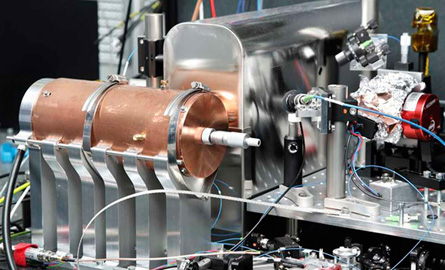
A research team at VTT MIKES, a Helsinki, Finland-based research facility for measurement technology, is claiming a new record in optical-clock absolute frequency measurements using a strontium single-ion clock with exceptionally low uncertainty and high uptime.The researchers have demonstrated a strontium single-ion optical clock with an exceptionally low systematic uncertainty of 7.9×10⁻¹⁹, among the lowest ever reported. VTT adds that the official definition of the second is due to be updated for the first time in decades. The change will be based on new optical clocks, which are far more precise than today’s standards.
Over 10 months, the clock’s frequency was measured against International Atomic Time (TAI) with an impressive 84% uptime. The record-setting total uncertainty of this measurement was just 9.8×10⁻¹⁷, limited by the cesium clocks that enable the current definition of the second and calibrate TAI.
“Optical clocks with low systematic uncertainty and high reliability as well as continuity with the current cesium-atom-based definition are among the criteria that need to be fulfilled before the redefinition [of the second] can take place. Our work has made a significant contribution towards these,” said Thomas Lindvall, Senior Scientist at VTT MIKES.
Materials tobe identified by devices based on metalensesA VTT-led research project is developing compact spectral imaging and gas measurement technologies for industries and medical diagnostics. Innovations based on photonics, use, for instance, infrared light to identify gases. With VTT’s new optical MEMS solutions, instruments and sensors are easier and cheaper to manufacture from readily available and non-toxic raw materials.
The Efficient Photonics for Sustainable Imaging and Sensing (EPheS) project, involving four companies and two research institutes, is developing tunable optical spectral filters and systems based on metalenses.
These solutions serve a wide range of applications, ranging from environmental monitoring such as hazardous gas detection, green energy initiatives to food and pharmaceutical safety as well as medical diagnostics, such as tissue analysis.
“Novel spectral imaging and gas measurement technologies are essential for creating a sustainable circular economy. They can be used to reduce the carbon footprint of different industries and increase the carbon handprint, i.e. the positive environmental impact of these technologies,” said Aapo Varpula, project coordinator and Research Team Leader for Medical microsystems at VTT.
Launched at the beginning of 2025, the three-year project is a part Chip Zero ecosystem, run by Applied Materials, based in Santa Clara, Ca. The other project partners are Tampere University, Vaisala, Gasera and Schott Primoceler.
“We are currently in the design phase, and we will start component fabrication in VTT’s cleanroom for 200 mm wafers around the turn of the year. This is an excellent opportunity for VTT to develop novel infrared spectral technologies and demonstrate them in new applications,” said Varpula.
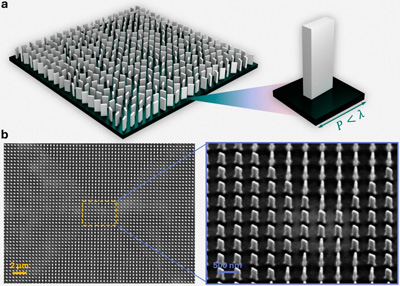
EPheS combines metalenses and MEMS-based adjustable infrared filters into compact systems for the spectral-based detection of gases and hyperspectral imaging. “Metalenses are flat, nanostructured lenses that can replace traditional optics. This enables the manufacturing of simpler, lighter and more resource and cost-effective systems,” said Varpula.
The photonics technologies being developed allow the analysis of, for example, gases and materials in real time and with high sensitivity. This can be achieved without interference from other gases, using methods such as photoacoustics or infrared spectroscopy. The gas sensors and instruments use microfabricated tunable LWIR filters.
“In the photoacoustic method, gas is collected into a measurement chamber and irradiated with infrared light. When the light is absorbed by the gas, it generates an audio signal. This will only happen when the chamber contains a specific gas for which the wavelength of the infrared radiation is tuned,” said Varpula.
 |  |  |  |  |  |  |
| © 2025 SPIE Europe |
|