 |

03 Mar 2026
Laser modifies blood-brain barrier to enhance efficacy of medication fighting disease.
A project at Keck Medicine of USC has developed a laser-based treatment that may dramatically improve survival for patients with brain cancer.Published in Nature Communications the findings offer good news for patients with recurrent high-grade astrocytoma brain cancer and glioblastoma, where survival rates are typically low.
One problem in treating these cancers is the blood-brain barrier, a tightly sealed layer of cells that acts as a protective boundary between the brain and the bloodstream.
Although critical to several aspects of human biology, the blood-brain barrier remains challenging to study and can present hurdles to specific therapies.
In the case of brain cancer the barrier is so effective that it limits the ability of immune cells, including cancer-fighting T-cells, to enter the brain and reach the tumor.
The Keck Medicine solution involves laser interstitial thermal therapy (LITT), a MRI-guided procedure primarily designed to use heat to destroy areas of abnormal cells or dead tissues through laser ablation. The therapeutic effects of the therapy may extend beyond direct tissue removal, however.
Clinical evidence suggests that LITT induces transient disruption of the blood-brain barrier, as well as driving local tumor-specific immune responses that peak weeks or months after the treatment. This makes LITT responsible for a set of complementary and desirable mechanisms.
Help for patients with few remaining options
In a clinical trial on a cohort of 45 patients, Keck investigators applied LITT via the NeuroBlate platform, a commercial laser-based device designed specifically for use in the brain.
The trial combined LITT, which destroys tumor tissue and disrupts the blood-brain barrier, with a common immune checkpoint inhibitor drug, pembrolizumab. Once patients receive the immune checkpoint inhibitor, the disruption lets tumor materials slip past the blood-brain barrier and into the blood.
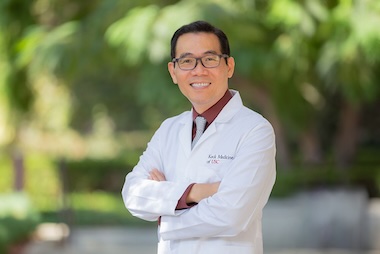
"This alerts T-cells to the presence of the tumor and provides easy passage of these T-cells to rush in, find and attack the tumor," said David Tran, chief of neuro-oncology at Keck Medicine.
Nearly half of patients treated with LITT and pembrolizumab were still alive at 18 months, with more than one-third living more than three years, far exceeding the typical four-to-five-month survival for patients with recurrent high-grade astrocytoma. None of the patients who received a conventional treatment of surgery followed by pembrolizumab were alive at the 18-month-mark.
"These results suggest that LITT can help the immune checkpoint inhibitor pembrolizumab work more effectively against high-grade astrocytoma," commented Tran. "Patients with this type of advanced cancer have few remaining options and poor outcomes, and this approach could meaningfully extend their survival time and provide new hope for patients and their loved ones."
 |  |  |  |  |  |  |
| © 2026 SPIE Europe |
|