


SPIE Sensors + Imaging 2025: quantum satellite links and environmental threats
Photonics and sensing technologies are key enablers to diverse application developments.
17 September 2025 Photonics World
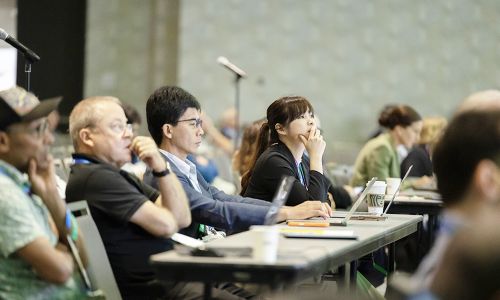
 Monday afternoon saw a trio of distinctive and very different plenary talks at this week's SPIE Sensors + Imaging conference and exhibition at the IFEMA Conference Center in Madrid, Spain.
Topics presented to the packed theater included: assessing space and terrestrial methods of Quantum Key Distribution (QKD) for secure communications, their drivers and perspectives; the opportunities and challenges of using high-resolution satellite imaging for hydrology applications; and analyzing extreme flooding events around the Mediterranean. The third of these was notable for considering recent devastating inundations in coastal regions of Spain.
Space-based QKD, drivers and perspectives
Presenter Ángel Álvaro Sánchez, from Thales Alenia Space España, who is Technical Director of the Spanish GEO QKD initiative, is targeting a "full end to end QKD service based on a geostationary payload by 2028."
He said, "satellite-based QKD systems appear as a potential solution to cover long distance links that cannot be satisfied through fiber links due to current technological limitations that confine fiber-based QKD links to hundreds of kilometers.
"Different alternatives are being evaluated involving both geostationary and low earth orbit. Both approaches offer advantages and disadvantages that will very likely lead to hybrid space-based systems integrated with ground-based QKD networks and service different end users, like current space-based telecom systems are integrated in the global network."
 Sánchez said that current technical discussions focus mainly on the nature and implementation of the physical quantum link and the different QKD protocols implementations and vulnerabilities. Turning this on its head, his lecture presented the nature and constraints of satellite-based QKD system from an end-to-end perspective, focusing on systemic elements beyond, but considering, the quantum link.
He described differences and commonalities between LEO (low Earth orbit) and GEO (ground-based) approaches for key management, scheduling, and other elements of the system impacting the associated channel, such as the signalling, the strategy and formats for pulse identification or the error correction protocols. He said, "By their own nature, QKD systems are meant to exist in close interaction with the classic telecommunication systems they are meant to protect."
His key takeaways were: "Quantum is currently a hot topic in the space sector; space QCI is in a transitional state between experiments, demonstrators, and operational systems; but three key challenges remain - spatialization of key building blocks, the definition of a commercial QKD/QCI receiver, and a detailed definition of use cases and service needs."
Satellites for hydrology applications in snow-influenced regions
The second plenary was presented by Prof. María José Polo, Univ. of Cordoba, Spain. Polo has been professor of hydraulic engineering at Cordoba since 2016. She specializes in hydrology and her research on snow dynamics and mountain hydrology in southern Spain has contributed to forecasting and planning.
 Her talk considered how the availability of high-resolution products from recent satellite missions opens a broad field for new or enhanced applications in hydrology, especially in the framework of water fluxes modeling. Polo noted, "The scale effects of a coarse mapping of such variables on the resulting modeled variables can significantly affect the accuracy and skill of hydrological models, and therefore pose a constraint for the further embedding of remote sensing data into forecasting schemes or assessments."
"The new context offers the possibility of not only increasing the ability of models to assess the spatial variability of descriptors and processes in heterogeneous areas, but also to quantify person-operated management issues that greatly impact the hydrological processes on the local scale - such as irrigation practices, reservoir operation, modification of the soil, and the water budget on the global scale," she said.
To highlight these opportunities, Polo assessed examples from snow-affected areas, with focus on key states, such as the initiation of melting, roughness or snow depth, and their relevance for global warming assessment of scenarios and adaptation strategies or forecasting of floods in alert-systems. Current limitations and challenges for an efficient merging of different data sources in such applications were also addressed.
Polo concluded, "High-resolution satellites can provide us with an infinite number of possibilities, but beyond that we must integrate collected data with further information and analyses to retrieve or extract the most information - and especially to avoid mistakes."
Understanding flooding events in the Mediterranean
 The third presentation was by the engaging David Pino, from the University Politècnica de Catalunya, Spain. Prof. Pino has been studying the dynamics and composition of the atmospheric boundary layer for 20 years. During the past 10 years his research has focused on analyzing the atmospheric and hydrological conditions, impacts and climatic evolution of the floods affecting the Spanish Mediterranean basin during the past millennium.
Going back so far in time has required analysis of church records and even flood height "watermarks" inscribed on buildings. But crunching this wealth of data from such a long time envelope has expanded Pino's understanding of supposedly unprecedented devastating events.
"The Mediterranean climate is characterized by hydrometeorological extremes (floods and droughts). Their impacts have probably increased due to climate change, increased vulnerability and, more importantly, exposure caused by human activity," he said. "I will show the necessity of tackling this type of events with a multi- and interdisciplinary approach, embracing climatology, hydrology, history, geography, and disaster risk management, to explore the evolution, impact, and memory of floods across the region."
Pino took a detailed look at two emblematic recent events: Storm Gloria (2020), which severely affected eastern Spain and parts of the western Mediterranean, and the 2024 DANA (Isolated Depression at High Levels in Spanish), which caused widespread flooding in Valencia and how remote sensing has provided new tools to analyze their impacts.
 He said that collaboration with researchers from different disciplines has allowed his team to build up an extensive archive, encompassing more than 10,000 episodes that includes over 35,000 documented cases that provides critical insights into the historical patterns of extreme weather events and their socio-environmental impacts. "The research aims to inform climate risk management and territorial planning in the face of increasing hydrometeorological hazards," he said.
In the subsequent Q&A session, Prof. Pino was asked, "Why are we are not better prepared not only for climate change, but not even for the normal extremes. Do you have any insight in why this problem is not being solved or how to proceed? Do you have any recommendations in that direction?"
Pino replied that he was often asked about this and the answer is always the same: "There is usually a choice between between addressing climate change or the economy." He added that there was a problem arising from flooding facing his own region Catalonia, in north-eastern Spain but that the costs and social consequences of addressing it were enormous.
"The point is that there are a lot of people living in Catalonia. We have calculated that there are eight million people living there. There two options [to avoid the highest flood risks]: we need to move 15% of the population, including schools, houses, business. Or the other solution is education in the sense of earthquakes in Japan. We need to educate the people saying you are living here. Be aware, there will be alerts there will be red flags, that would be better."
"We need to educate the people including stakeholders because the other way will require much more money in order to do it."
Diffraqtion aims high with $10M for 'quantum' camera platform
September 01 2026