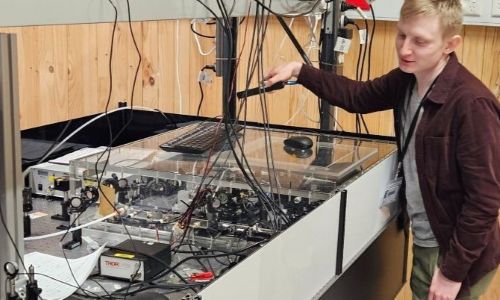



Johns Hopkins measures retinal oxygen in unprecedented detail...
...and University of Arizona maps tumors with multiphoton microscopy.
07 October 2025 Photonics Applications News
 A project at Johns Hopkins University has developed a dual-imaging system able to map retinal structure and capillary oxygen levels simultaneously.
Described in Neurophotonics, the platform could help clinicians noninvasively measure oxygen levels at the fine scale of retinal capillaries, where early disease changes can occur.
"Oxygen metabolism is important to retinal disease development, but current imaging methods face challenges in resolution, throughput, and depth sectioning to spatially map microvascular oxygen," noted the JHU team in its paper.
The solution was to combine two modalities, visible light optical coherence tomography (VIS-OCT) and phosphorescence lifetime imaging.
OCT produces 3D images of tissue microanatomy and blood vessels, while phosphorescence data gathered with a phosphorescence lifetime imaging scanning laser ophthalmoscopy (PLIM-SLO) can indicate the oxygen partial pressure (pO2) within those vessels. This is achieved thanks to Oxyphor 2P, an added probe molecule that changes its phosphorescence lifetime depending on oxygen levels.
In combination these techniques can capture high-resolution volumetric tissue information and corresponding capillary-level oxygenation over a range of depths, with the two systems synchronized to acquire data through the same optical path so oxygen readings and structural images could be spatially aligned.
Tests in healthy mice showed that the system could track changes in retinal oxygenation in response to different inhaled oxygen levels. The measurements also matched systemic blood oxygen saturation, producing oxygen dissociation curves consistent with known hemoglobin physiology.
By simultaneously recording anatomy and oxygen tension, the dual-channel system offers a new tool for studying how retinal oxygen supply is altered in disease and during treatment.
"The system leverages in vivo, nondestructive imaging capabilities, which should be especially useful in longitudinal studies of etiology or drug effects on the retina by allowing repeated imaging of the same subject over time," said the team.
With further refinement, such as adaptive optics for sharper images, the platform may pave the way toward improved diagnostics and monitoring strategies in human eye disease.
Collagen content and image contrast: key indicators of cancer
 A combination of multiphoton microscopy (MPM) and deep learning could rapidly and accurately identify pancreatic tumors, offering a potential tool for real-time surgical guidance, according to a project at the University of Arizona.
The findings could in particular assist detection of pancreatic neuroendocrine neoplasms (PNENs), a rare form of cancer that affects hormone-producing cells in the pancreas. Surgical decisions about PNENs often depend on pathology results that can take hours or even days, delaying treatment and increasing the risk of incomplete tumor removal.
The University of Arizona previously studied how an optical phenotyping approach to pancreatic cancer based on MPM and deep learning could point to personalized treatments for individual patients.
As reported in Biophotonics Discovery, the new project employed MPM to stimulate non-linear second harmonic generation responses from certain cellular materials in PNENs, especially connective tissues and collagen, without the need for contrast agents. These biomarkers help distinguish between healthy and cancerous tissue.
To interpret the images, the researchers applied both machine learning (ML) and deep learning techniques, with one ML algorithm and four convolutional neural networks (CNNs) being trained to classify the tissue types.
In proof-of-concept trials on samples from institutional biorepositories, the ML algorithm achieved an accuracy of 80.6 percent in identifying cancerous tissue, while the CNNs performed even better, with accuracies ranging from 90.8 percent to 96.4 percent according to the project. These high scores are especially notable because the samples came from multiple biorepositories, suggesting that the method is robust across different sources.
The ML results offered their own insights, and when analyzing which features influenced the ML model's decisions researchers found that collagen content and image characteristics such as contrast were key indicators of cancer. This could help refine future models and improve understanding of PNEN tissue structure.
"With the ability to assess tumor margins rapidly and potentially automatically, both disease recurrence and the need for resections after initial surgery could be reduced," said the Arizona team.
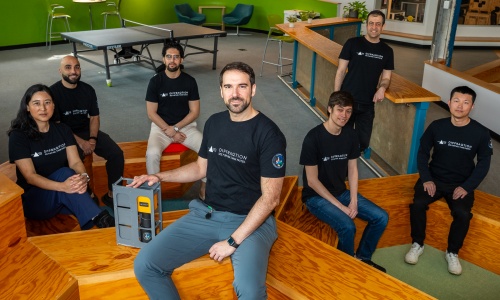
Diffraqtion aims high with $10M for 'quantum' camera platform
September 01 2026