


University of Arizona brings precision medicine within reach of more patients
Optical microscopy and AI could make personalized pancreatic cancer treatment faster, more affordable.
15 July 2025 Research & Development
 A project at the University of Arizona has developed a new optical platform intended to improve identification of disease phenotypes in pancreatic cancer.
The goal is to reduce reliance on expensive and complex testing for detection of specific disease characteristics, and to bring "precision medicine" within reach of more patients.
As described in Biophotonics Discovery, precision medicine involves personalizing treatment plans to suit an individual's particular genetic and environmental situation, and so improve patient outcomes.
This approach has achieved notable successes, but the tools used to identify disease phenotypes have lagged, according the the University of Arizona team.
"Currently, identifying these phenotypes often requires expensive tests, such as those that examine molecular markers, use special stains on tissue samples, or sequence a person's genetic material," said the project.
"Because of this barrier, many of the potential benefits of precision medicine remain out of reach for many patients."
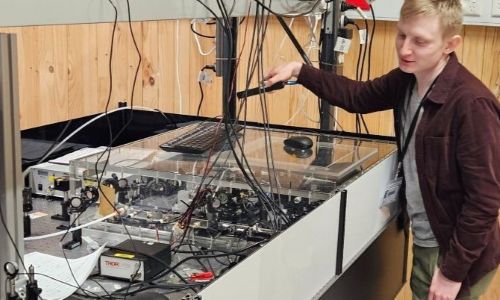
The Arizona solution is an optical phenotyping approach in pancreatic cancer specimens combining label-free multiphoton microscopy and deep learning. It also exploits spatial transcriptomics, an approach to RNA sequencing that captures positional data about the tissues under analysis.
In trials, the project first employed a spatial transcriptomic technique to generate spatial maps of gene expression in tissue samples, establishing phenotypes associated with the disease.
A new frontier for clinical treatments
Label-free optical microscopy on the same specimens then measured natural fluorescence from different biomarkers present, while multiphoton microscopy indicated presence of the structural protein collagen through second-harmonic generation imaging.
A bespoke AI algorithm developed by the project and trained to predict the tissue's phenotype based only on the label-free optical microscopy images was put to work, and its results compared with the spatial transcriptomic information for the tissue regions of interest.
This showed that the optical plus AI approach successfully predicted tissue phenotypes to nearly 90 percent accuracy, according to the Arizona team, demonstrating the promise of label-free microscopy and artificial intelligence for precision medicine applications.
Results also demonstrated that classical image analysis methods alone were not able to extract sufficient information to predict phenotypes, showing that AI-based methods are necessary to link label-free optical images with characteristics related to underlying disease mechanisms.
The interface between genetic sequencing and label-free optical imaging methods represents a "new frontier" for clinical treatment of conditions such as pancreatic cancer, noted the team.
"This framework has wide potential for addressing a number of intriguing scientific questions, and lays the foundation for accelerating discoveries in the field of biophotonics."
Diffraqtion aims high with $10M for 'quantum' camera platform
September 01 2026