 |

19 Mar 2026
Another selection of significant announcements from the optical communications expo in Los Angeles.
The 2026 Optical Fiber Communications Conference and Exhibition (OFC) exhibition, taking place this week in Los Angeles, Ca., features demonstrations of the industry’s most innovative new products and optical technologies driving advances in quantum networking, AI, and data center connectivity. Here, below, optics.org reviews a selection of new launches and announcements from this week’s expo.
Related news: OFC 2026 showcases high-speed optical networking and interoperability (and launches round-up, part I)
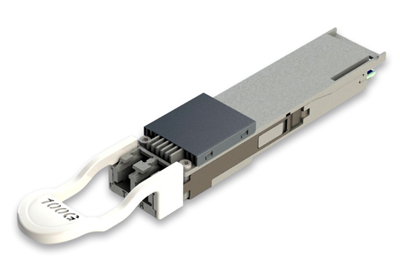
Coherent has launched a dual-laser QSFP28-DCO for single fiber transmission. The QSFP28-DCO module is designed to enable bi-directional 100G coherent transmission over a single working fiber. This development brings coherent performance to fiber-constrained network environments in a compact QSFP28 form factor for the first time, says the company.The module allows network operators to deploy bi-directional 100G coherent links over a single fiber, which Coherent says is “an essential capability for routes where fiber availability is limited or costly to expand.”
By enabling multiple 100G services on existing infrastructure, customers can significantly increase network capacity, extend reach up to 300km, and achieve up to a 10x capacity upgrade compared to legacy 10G bi-directional links. The solution allows service providers to maximize fiber plant utilization while maintaining operational simplicity and compatibility with deployed equipment.
Moran Roth, VP Product Line Management of Transmission at Coherent, said, “This dual-laser capability expands our portfolio to better serve Cable/MSO and wireless transport applications, delivering greater flexibility, scalability, and value to customers operating in fiber-limited environments.” The dual-laser QSFP28-DCO is generally available beginning in March 2026. The solution leverages the same proven technology platform used in Coherent’s single-laser QSFP28-DCO modules, which have been successfully deployed worldwide for the past two years.
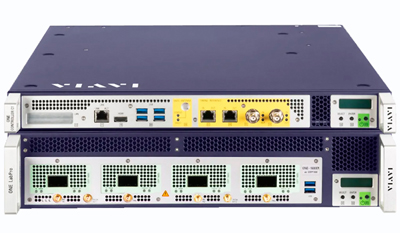
Viavi is presenting its AI fabric and optical test advances; demonstrations include 1.6T high-speed Ethernet, silicon photonics, PCIe and fiber sensing solutions.The company stated, “The evolution of AI, security and high-speed photonics have converged to force a change in validation and optimization strategies. Today, the industry requires a comprehensive and AI fabric-aware view of the network.”
Viavi highlights its latest solutions designed to help customers meet the challenges of modern AI interconnects, ensuring that tightly coupled high-performance systems maintain required throughput, reliability and scalability. Demonstrations include 1.6T Ethernet, transceiver, connectivity and silicon photonic manufacturing solutions, PCIe® over optics, automated network test, and fiber sensing.
Viavi’s One LabPro and TestCenter platforms for OSI L0-3 traffic generation and analysis are on show, alongside the new hollow-core fiber test solution and DCX-700 optical loss test set for testing up to 24 fibers simultaneously. Many of these demonstrations will be run in partnership with the Ethernet Alliance and the Fiber Optic Center. Interoperability demonstrations featuring next-gen Ethernet technologies will be presented in collaboration with Amphenol, Celestica and other industry partners.
In addition, three new technologies are unveiled:
AIM Photonics is sponsoring a series of talks examining key challenges facing the industry, including:
Caltech’s silicon tech brings ‘fiber-like efficiency’ to a chip
Researchers at California Institute of Technology have created a new photonic chip technology that guides light “nearly as efficiently as optical fiber”. By bringing fiber-like performance onto a silicon chip, they demonstrate that light can be precisely controlled across a broad spectrum — from ultraviolet to telecom wavelengths — with minimal loss and exceptional stability.
Caltech’s Kellan Colburn is presenting this research at OFC 2026, this week. He commented, “By bringing fiber-like performance across a broad spectral range onto a chip, this new technology could be used to build compact photonic quantum computers and networks, reduce the energy cost of server infrastructure, improve biomedical imaging systems, support lightweight photonic engines for AR displays, and enable portable precision timing and navigation systems.”
Hao-Jing Chen, co-first author of the work, added, “Many emerging technologies rely on stable, multi-wavelength light sources operating in the visible spectrum, such as on-chip atom/ion control,” said. “However, this has been difficult to achieve on a chip because losses rise dramatically at shorter wavelengths.”
To overcome this challenge, the Caltech researchers have developed a CMOS-compatible process that allows germanium-doped silica to be fabricated using semiconductor manufacturing techniques. The new platform provides significantly lower optical loss across visible and near-infrared wavelengths while also supporting large optical mode areas on a chip. The large optical mode areas also reduce the effects of thermal noise, allowing significantly better laser coherence within the circuit.
“Our work demonstrates a clear pathway for translating technologies traditionally confined to optical fiber into scalable semiconductor manufacturing platforms,” said Colburn. “Over time, this could translate into smaller medical devices, more accurate navigation without GPS, faster communications and new consumer technologies built on photonic chips.”
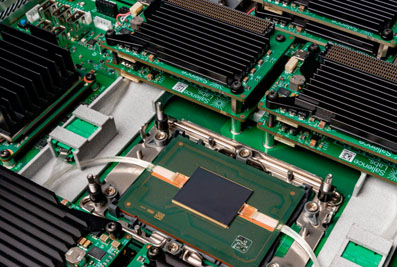
Salience Labs has launched an all-optical 32-port switch. Designed to unlock peak performance in AI datacenters, the switch technology improves network latency, throughput and reliability metrics while lowering power consumption. The 32-port product is the first product in Salience Labs’ suite of all-optical circuit switch solutions, which also includes 64- and 128-port technologies to meet the evolving capacity and bandwidth needs of next-generation AI datacenters.According to ABI Research, global datacenter capacity is forecasted to grow sixfold between 2025 and 2035, climbing from 24.4 GW to 147.1 GW. This growth is driven by enterprise AI adoption, hyperscale expansion and increasing rack-level power density. As the need for datacenter capacity grows, so do challenges around network bottlenecks that directly have an impact on performance, efficiency, power consumption and cost.
Salience Labs’ all-optical, fully integrated switch architecture is designed to address these exact challenges and be compatible with existing transceivers and infrastructure. The company’s integrated switch technology is designed to be deployed at scale to connect thousands of GPUs across multiple racks for optimal scale-up and scale-out network performance in AI datacenters.
“Optical switching is moving networks from electronic packet routing to highly predictable, energy-efficient optical connectivity. We are transforming the networking layer, unlocking the ability to extend scale-up and scale-out networks across the datacenter,” said Vaysh Kewada, CEO and co-founder of Salience Labs. “Our dedicated team of researchers and engineers has a clear product roadmap, delivering all-optical switches that improve latency to increase performance and enhance end-user experience to unlock true value from AI.”
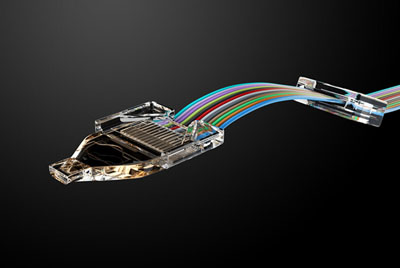
3M has announced a major expansion of U.S. manufacturing capacity for its 3M™ Expanded Beam Optical interconnect technology, which is an optical connectivity solution designed to improve deployment speed, reliability, and operational efficiency within next-generation AI data centers. The expansion will include adding new advanced manufacturing equipment and additional production space to support increasing global demand for high-speed interconnects in AI data centers.Alex An, vice president, Data Center Vertical Business for 3M, said, “By expanding our manufacturing capacity for 3M Expanded Beam Optical technology, 3M is helping to ensure our customers have the high-performance interconnect solutions they need to build and scale the AI data centers that are powering the digital economy.”
The capacity expansion reflects accelerating adoption of optical interconnect technologies designed for high-density computing environments. As AI clusters grow and data center architectures evolve to support faster data movement and higher bandwidth demands, expanded beam optical technology helps improve connection reliability while reducing maintenance complexity in large-scale deployments.
3M’s Expanded Beam Optical solutions leverage the company’s material science expertise to enable durable, dust-resistant optical connections designed for high-density computing environments. The technology is part of the firm’s portfolio of data center solutions that help address high-speed connectivity, rack and power, and advanced materials challenges associated with next-generation AI infrastructure.
 |  |  |  |  |  |  |
| © 2026 SPIE Europe |
|