


Oregon State University develops improved phototherapy for skin cancer
Use of novel nanorods keeps laser exposure within safe limits.
17 February 2026
A project at Oregon State University (OSU) has designed a new protocol for phototherapy allowing the use of low-power laser irradiation.
Described in Advanced Functional Materials, the technique "represents a huge step toward solving a persistent problem with using photothermal therapy to treat melanoma," said OSU.
Photothermal therapy employs near-IR irradiation to activate local photothermal agents, in particular metallic nanoparticles, to trigger localized tumor ablation.
The persistent problem noted by OSU relates to the intensity of laser light needed to reach therapeutic temperatures, and whether this exceeds the normal skin safety limits of 0.33 W per square centimeter, hindering clinical translation of the technique.
In the past this issue has been tackled through the use of more complex optical set-ups, such as the dual-wavelength strategy developed by China's SIAT research center, in which irradiation takes place at different wavelengths for set periods of time.
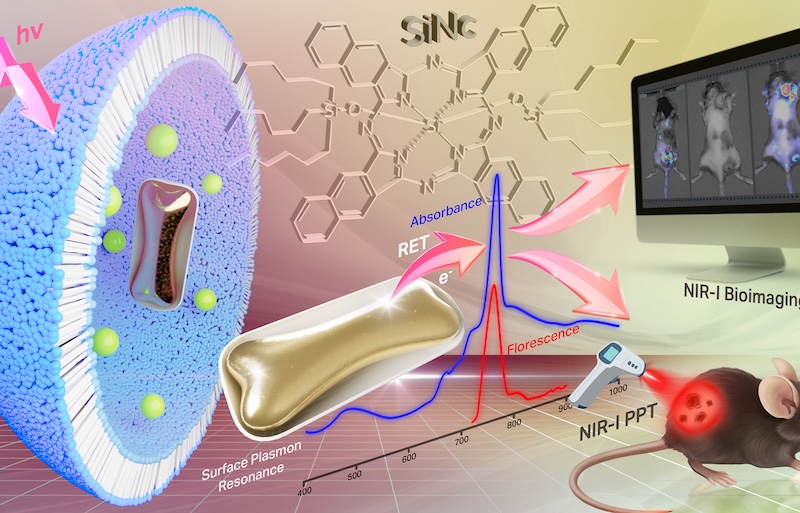
OSU's breakthrough, in the lab of Olena Taratula, is based on the use of gold nanorods coated with an iron-cobalt shell and tightly loaded with a dye that heats up upon exposure to near-infrared light. This irradiation triggers resonance energy transfer in the nanorods, a nanoscale process in which energy moves directly from one molecule to another.
The highly efficient nature of resonance energy transfer allows the nanoparticles to heat up quickly under laser exposure, but remain below the irradiation safety threshold needed to maintain healthy skin.
"The Fe/Co shell functions as both a nanoscale spacer and a plasmonic modulator, red-shifting and amplifying the gold nanorod resonance to enhance spectral overlap and facilitate non-radiative energy transfer," said the project in its published paper.
Image-guidance for precise phototherapy
In trials, the new protocol was applied to an aggressive melanoma mouse model developed by OSU. Results showed that a single treatment at an exposure level of 0.25 W per square centimeter was enough to completely ablate the tumor while remaining well under the skin's exposure safety limit.
Alongside the desired tissue ablation properties, OSU's nanoparticles are designed as active fluorescence agents, opening up the possibility of optically imaging the location of the nanorods as a guide for the ablation therapy procedure. This would further lower the need for unnecessary misdirected irradiation.
More than 8,000 people in the US died of melanoma in 2025, according to the US National Institutes of Health, and more than 100,000 new cases were diagnosed.
"Many of those cases likely were treated with a surgical procedure that required a big incision and a significant amount of tissue removal to help ensure no cancerous cells were left behind," commented Prem Singh of the OSU College of Pharmacy.
"Photothermal therapy on the other hand is a minimally invasive treatment, and our work establishes resonance energy transfer as a truly transformative strategy for coming up with next-generation photothermal therapy agents."
MIT microparticles deliver phototherapy and chemotherapy
November 04 2024
Diffraqtion aims high with $10M for 'quantum' camera platform
September 01 2026