



IPG ships counter-drone laser weapons to Lockheed Martin
Fiber laser firm's 'Crossbow' system is designed to destroy small drones; CEO says tariff impacts 'largely mitigated'.
12 August 2025 Business News

Fiber laser specialist IPG Photonics has posted sales of $251 million for the second quarter of the year, well above the figure of $225 million that company executives had forecast back in May.
CEO Mark Gitin attributed that to the combination of a "modest recovery" in the firm's key industrial laser markets, alongside a lower-than-expected impact from trade tariffs.
"By quickly adjusting our operations, we were able to ship approximately $10 million out of the $15 million in customer orders that we believed were at risk of being delayed due to tariffs, and were not included in our second-quarter guidance," he told an investor conference call.
"In China, renewed capacity investments in battery manufacturing drove growth in our welding. On the industrial side, a stabilizing demand environment supported sequential growth in welding, cutting and marking applications."
However, the ongoing tariff pressures did hit IPG's profit margins, with the Massachusetts-headquartered firm posting a pre-tax income of $8.3 million in the quarter, down from $25 million a year ago despite a minimal change in overall sales.
Lockheed shipments
Gitin also highlighted a significant recent development in laser weapons, where IPG's "Crossbow" system is now shipping to top-ranking defense contractor Lockheed Martin.
"Last quarter, I shared that strategic investments to grow our advanced applications business allowed us to achieve a key milestone six months ahead of schedule," said the CEO. "I'm thrilled to announce that we've now delivered multiple units of our first, laser counter-UAV solution to Lockheed Martin."
Based around IPG's commercial single-mode lasers, Crossbow is described as a relatively low power but scalable and cost-effective laser defense system that can neutralize so-called "group one and group two" drones, which represent the smallest classes of unmanned aerial threats.
Having field-tested Crossbow over the past six months, the system will be making an appearance at the "DSEI UK 2025" trade show for military hardware, which takes place in London next month.
"We anticipate strong interest from both defense and commercial customers for protection of critical military and civilian assets," Gitin said, pointing out that IPG's manufacturing capability meant that Crossbow was being made available at a "very disruptive" price point.
Cautious optimism
While it does not offer the kind of high-power directed energy capability needed to bring down larger UAVs, artillery, and even missiles, Crossbow will help address a key threat, added the CEO.
"It's a big issue on the battlefield today," he pointed out. "These small drones that you can buy for hundreds of dollars can inflict major damage. And it's also an issue in civilian infrastructure, [for example at] borders, and we're starting to see more of that."
Looking ahead, Gitin reported cautious optimism and continued demand into the third quarter despite the tariff-related uncertainty, reiterating that the company can take advantage of its flexible manufacturing footprint in order to adapt to the unpredictable nature of current US trade policy.
He and CFO Tim Mammen are now expecting sales in the third quarter of the year to come in somewhere between $225 million and $255 million, with Mammen pointing to "signs of continuing revenue improvement" as IPG looks to recover from a slump in demand that saw company full-year sales slip below $1 billion in 2024 - the lowest annual figure for around a decade.
• IPG's Nasdaq-listed stock price appeared relatively unmoved by the latest company update, and continues to trade at around $75 - up slightly since the start of 2025 and equivalent to a market capitalization of just over $3 billion.

Leica and Cognex launch AI software module Aivaro to improve inspection
September 30 2026

Photonic monitoring to identify food safety, quality, and animal welfare
September 30 2026
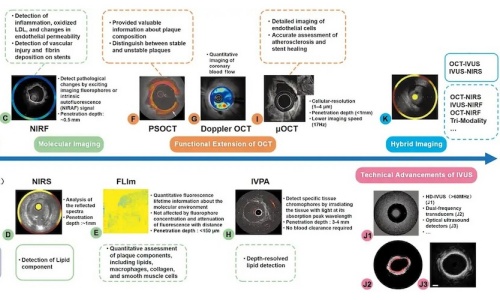
Advances in optics and computation boost coronary intravascular imaging
September 30 2026

Australia’s SKA tests antenna layout for Low telescope
September 30 2026