


Canadian-German group converts laser light into electrical power at 54% efficiency...
...and solar panels and rice fields thrive together in Japanese agrivoltaics pilot.
11 August 2025 Research & Development
 In a joint research effort, scientists from the University of Ottawa, the National Research Council Canada NRC and Fraunhofer Institute for Solar Energy Systems (ISE) have developed photonic power converters which convert 1446 nm laser light into electrical power with "an unprecedented" 53.6 percent efficiency and an output voltage above 2 volts.
The multi-junction photovoltaic devices are based on indium gallium arsenide Phosphide (InGaAsP) and they have exceeded 50 percent efficiency under 1.446 micrometer laser light.
The group stated that the performance "paves the way for long-distance power transmission via optical fibers, for example in telecommunications, as well as free space applications." The results were published open access in Cell Reports Physical Science.
Optical fibers can be used to transmit power using a photovoltaic cell to convert the light into electricity. "In traditional power over fiber systems, for longer range applications most of the laser light is lost in the fiber," said Professor Karin Hinzer of the University of Ottawa who leads the Canadian activities in this project. "With our new devices, the distance can be much longer."
"That makes this technology interesting for applications in telecommunications where laser power transmission is essential for both power and data delivery," said Dr. Henning Helmers, head of III-V Photovoltaics and Concentrator Technology at ISE and lead of the German activities in this binational R&D project.
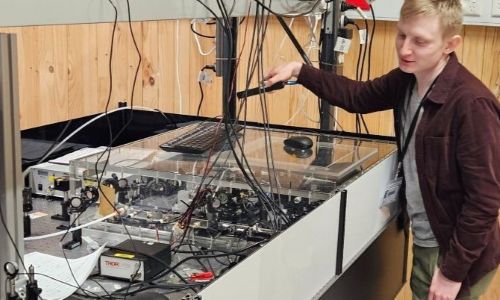
The devices were jointly designed by the project partners. The team at ISE grew and fabricated the InGaAsP devices. NRC scientists were involved in the modelling of the converters. Researchers at the University of Ottawa worked on modeling and measured their performance.
Solar panels and rice fields thrive together in Japanese agrivoltaics pilot
 Researchers from the University of Tokyo have demonstrated that a dual-axis sun-tracking agrivoltaic system position over rice growing fields can simultaneously produce competitive solar power while maintaining high-quality rice yields.
As countries race to expand renewable energy infrastructure, balancing clean electricity production with land use for food remains a pressing challenge-especially in Japan, where mountainous terrain limits space. A recent study led by researchers from the University of Tokyo explores a promising solution: integrating solar panels with traditional rice farming in a practice known as agrivoltaics.
As reported in the Journal of Photonics for Energy, the research team installed a dual-axis sun-tracking photovoltaic (PV) system over a rice paddy in Miyada-mura, Nagano Prefecture.
Positioned three meters above the ground, the solar panels generated electricity while allowing rice cultivation to continue underneath. The system was designed to adjust panel angles daily and seasonally, prioritizing rice growth during the planting season and maximizing energy production during the off-season.
Over two growing seasons, the agrivoltaic system achieved rice yields of 75 percent and 85 percent compared to nearby traditional paddies. While slightly lower in the first year, yield improved significantly in the second year after fine-tuning the amount of sunlight reaching the crops. Importantly, the rice also met Japan's highest grain quality standards.
At the same time, the PV panels generated nearly 44,000 kilowatt-hours of electricity annually-an efficiency (961.4 kWh/kW) that compares favorably with similar systems in Europe. Over a projected 20-year lifespan, and without government subsidies, the estimated cost of electricity production was about ¥27 per kilowatt-hour (US$ 0.18) -roughly equivalent to Japan's household electricity rate at the time.
The study underscores the tradeoffs involved in balancing crop productivity with solar energy output. Researchers showed that careful management of shading, including adjusting the panels' angles throughout the day and season, can help achieve both goals. They also highlight future directions such as using AI to optimize sunlight sharing in real time and experimenting with high-efficiency or semi-transparent solar panels to further reduce crop shading.
With Japan aiming to significantly increase its solar capacity by 2030, the researchers hope their results will inform broader adoption of agrivoltaics-particularly in rural areas where preserving food production is essential. By combining energy and agriculture, they argue, it may be possible to support both sustainability and economic resilience on the same piece of land.
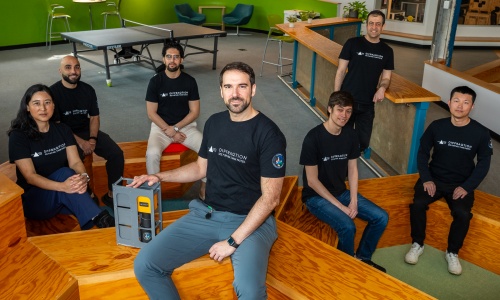
Diffraqtion aims high with $10M for 'quantum' camera platform
September 01 2026