


Indoor photovoltaics with over 40 percent efficiency developed
Improved quality of the solar cell absorber enables high efficiency under 100 lux.
21 July 2025 Research & Development
 Researchers at the Fraunhofer Institute for Solar Energy Systems ISE, Freiburg, Germany, have succeeded in developing solar cells based on III-V semiconductors that can achieve an efficiency of over 40 percent indoors.
By the optimized design and improved quality of the solar cell absorber material, the research team achieved significantly high efficiencies even under very low light conditions of just 100 lux.
ISE stated that "This result makes this technology particularly attractive for autonomous Internet of Things (IoT) applications that operate indoors without an external wired power supply." The group's findings were published in Applied Physics Letters.
Benefits for IoT systems
Indoor photovoltaics use the artificial light indoors to generate electricity. This technology is particularly useful for devices that cannot be constantly charged, such as many components in IoT systems.
"Various photovoltaic technologies can be used for this purpose," commented Dr. Henning Helmers, Head of Department at Fraunhofer ISE. "Solar cells based on III-V semiconductors reach the highest efficiencies, this especially applies to artificial (LED) light."
In their study, the researchers optimized gallium indium phosphide (GaInP) solar cells, as their band gap is almost ideal for converting visible light into electricity. "We investigated how well the solar cells with different architectures work under low light conditions," said Malte Klitzke, lead author of the study and scientist at ISE.
"It was shown that the n-doped GaInP cell performs significantly better than the p-doped cell. Charge carriers in n-doped GaInP cells have a longer lifetime, and thus they can produce more electricity even under weak light. This enabled us to achieve very high efficiencies with them in our experiments when converting weak indoor light into usable power."
The research result combines findings from several research projects: 50 Percent, funded by the Federal Ministry of Economics and Climate Protection (BMWK), H2Demo, funded by the Federal Ministry of Education and Research (BMBF) and "SMART", supported by AZUR SPACE Solar Power and the German Space Agency (DLR).
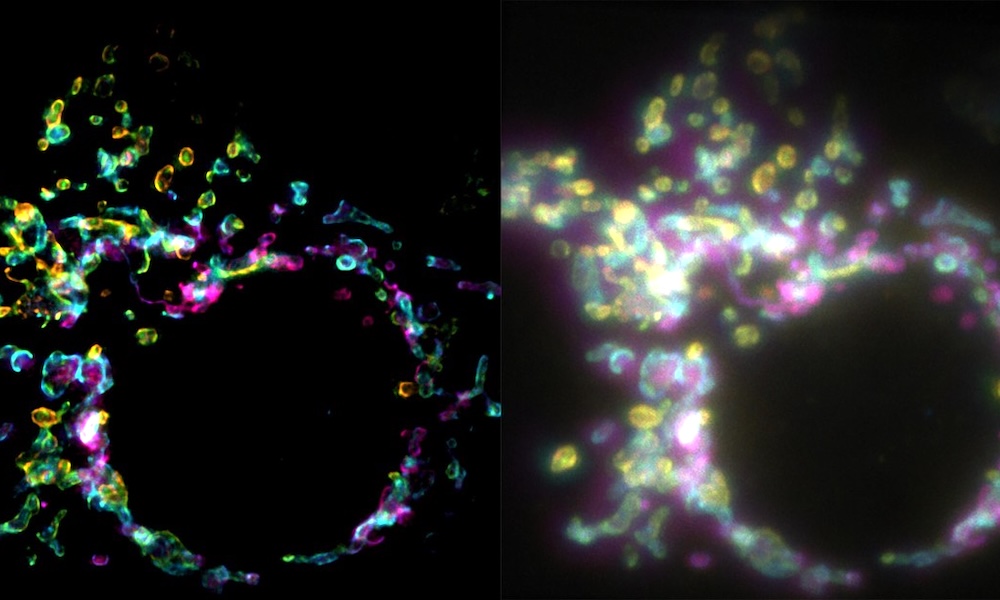
EPFL enhances super-resolution imaging from single camera exposures
September 09 2026
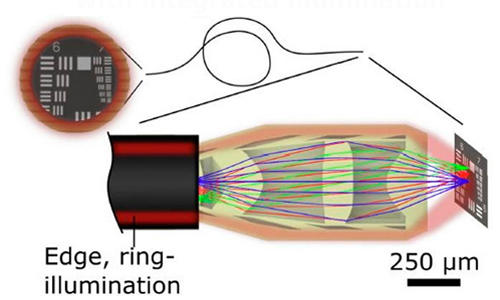
Stuttgart-led group combines illumination and microscopy in fiber bundle
September 09 2026
ESA Earth observation mission FLEX set to launch on September 15th…
September 09 2026
Oxxius looks to grow international footprint with €5M equity support
September 08 2026