


EC invests €5.6 M in laser to create film surfaces inspired by shark skin...
...and Photonics21 urges industry members to engage in Board of Stakeholders election 2025.
15 July 2025 Photonics World
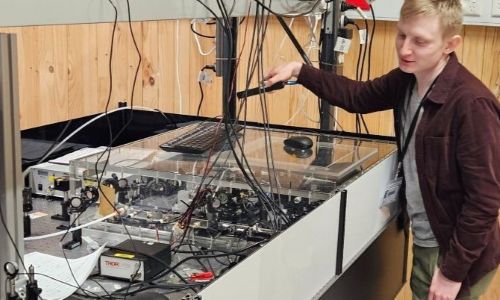
 A new project backed by the European Commission to the tune of €5.6 million and supported by the Photonics21 Photonics Partnership is developing a new laser system that can create precise, multifunctional patterns from nano to micro scale on polymer films.
Just as the sleek texture of shark skin allows these ocean predators to glide effortlessly through water, advanced films structured by this new laser system are being created to significantly reduce drag on aeroplanes and ships to lower fuel consumption and reduce carbon emissions.
The project, called OPTIMAL, is developing mastering technology to structure polymer films, fundamentally changing how surfaces interact with air or water, and offering a durable solution that outperforms smooth coatings.
'Riblets' reduce drag - and ice
Called "riblets", these microstructures, which mimic the texture of shark skin, are tiny, parallel grooves, often just tens of micrometres deep, that guide the flow of air or water more smoothly over a surface, helping reduce drag. Aircraft already have ice protection systems to remove or prevent moisture from forming on the vital parts of the aircraft, but the new film surfaces could further mitigate such risks, say its developers.
Microstructures such as riblets could have various functionalities like drag reduction, anti-icing or anti-soiling, but currently, the combination of these functionalities can only be obtained on a laboratory scale. Existing technologies, such as AeroSHARK, developed by Lufthansa Technik and BASF, have already introduced riblet surfaces to enhance aerodynamics and fuel efficiency. But, the OPTIMAL project focuses on revolutionising the manufacturing of "masters" - the finely detailed moulds or templates from which high-performance surfaces are replicated.
By integrating multiple laser lithography techniques, quality monitoring systems, and intelligent control algorithms into a single, streamlined platform, the project is enabling the creation of larger, more complex, and more precise master structures than ever before. Project coordinator Markus Postl said, "While 'shark skin' films already exist, the OPTIMAL project is taking this technology to the next level of precision and safety. We are adding extra value by redefining the way advanced manufacturing processes create these surfaces. OPTIMAL has an all-in-one approach."
"At the heart of this innovation is the use of AI and machine learning algorithms, which ensure that every component is manufactured to exact specifications. One of our goals is to create greener, more affordable products. We are combining multiple laser technologies with self-learning algorithms to optimise designs and speed up production. The OPTIMAL technologies include quality monitoring systems which can cut resource consumption by 40% to make manufacturing more sustainable."
Elena Turco from Joanneum Research and Project Manager at OPTIMAL said, "Being able to create precise, tiny structures, the OPTIMAL laser can be used to create tools used in high-tech manufacturing, such as molds for lenses, chips, and multifunctional surfaces. We are making them faster and at a larger scale, which is set to boost efficiency across multiple industries."
The medical sector could also benefit from the OPTIMAL system, which is being designed to enhance the production of microfluidic chips for Lab-on-Chip devices - small devices crucial for disease diagnostics and chemical analysis.
 Photonics21 urges industry to engage in Board of Stakeholders election 2025
Between 21 October and 4 November 2025, Photonics21 members will elect the new Board of Stakeholders. This year, 23 seats are up for election. The European platform has this week issued a statement urging interested parties to "register now as a voter and/or nominate a candidate".
The Board of Stakeholders (BoS) is the main decision-making body of Photonics21. In particular, the BoS is responsible for: determining all matters related to Photonics21; establishing Work Groups and appointing the Work Group Chairs; electing the Executive Board, including the President, and appointing BoS members.
Eligible voters are Photonics21 members who have registered on the Photonics21 website by 20 September 2025. According to the Terms of Reference §5(6)(c), each Photonics21 member has one vote. An affiliation is defined based on all the fully consolidated units listed in the Annual Report of the respective affiliation.
Interested parties can find more information about the membership and register as a member (click here).
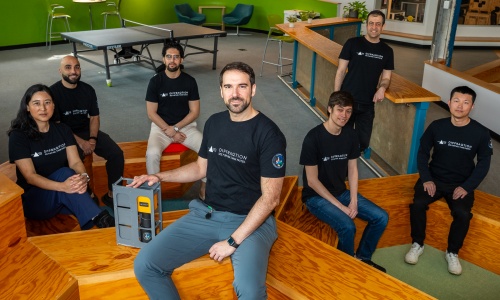
Diffraqtion aims high with $10M for 'quantum' camera platform
September 01 2026