 |

07 Jul 2025
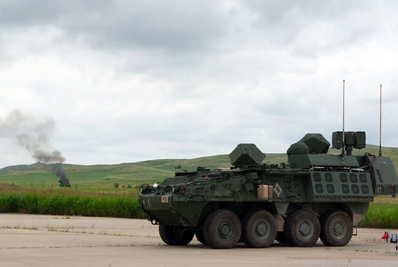
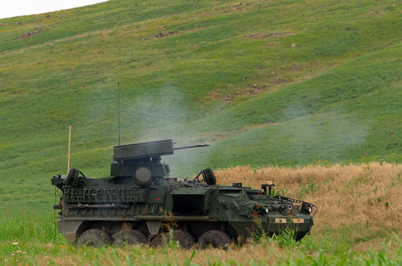
At Fort Sill, OK, soldiers conducted live-fire trials with directed energy weapons and kinetic systems.
In Oklahoma, the U.S. Army is taking aim at the future of air defense – powered by lasers. Recently at Fort Sill, soldiers have conducted a live-fire exercise integrating directed energy (DE) weapons alongside traditional kinetic systems, claiming to have made “a significant step toward fielding laser-based defenses against a new generation of aerial threats, particularly unmanned aircraft systems.”The exercise, spearheaded by the 4th Battalion, 60th Air Defense Artillery Regiment in partnership with the U.S. Army’s Rapid Capabilities and Critical Technologies Office, RCCTO, tested prototype DE weapons, including a DE Maneuver Short-Range Air Defense system, against a swarm of Group 1-3 unmanned aircraft systems (drones).
These tests, reported at the end of June, 2025, were conducted in conjunction with the existing M-SHORAD kinetic system, showed the potential of a layered air defense approach and yielded valuable data that will shape future development and procurement, notably the U.S. Army’s FY26 Enduring High Energy Laser program.
The U.S. Army’s pursuit of DE weapons for air defense stretches back decades, initially focused on strategic missile defense. However, the recent proliferation of inexpensive and readily available drones (worldwide) has shifted the focus to short-range air defense, where lasers and high-powered microwaves offer a potentially game-changing advantage.
“This exercise provided a test of the complementary nature of DE and kinetic systems, exploring how they can work together to create a more robust and resilient defense,” stated the U.S. Army.
Human elementBeyond the technological demonstration, the exercise also focused on the critical human element. Soldiers honed their tactics, techniques and procedures for integrating these new DE weapons into existing air defense architectures. The complex scenarios challenged soldiers to prioritize targets amidst multiple threats, establish clear identification protocols, and effectively deploy DE weapons under varying environmental conditions.
The exercise reaffirmed the continuing role of kinetic energy systems like the M-SHORAD, emphasizing augmentation rather than replacement. These proven systems offer a crucial backup, capable of engaging targets that may prove resistant to DE weapons.
“This live-fire event highlights the close relationship between 1AD, RCCTO and our unit,” said Lt. Col. Ronald Yuhasz, Commander of the 4th Battalion, 60th Air Defense Artillery Regiment. He stressed the importance of the exercise in shaping future battlefield tactics, particularly in close-quarters combat.
Col. Steven D. Gutierrez, RCCTO Project Manager for Directed Energy, emphasized the groundbreaking nature of the exercise, adding, “This live-fire exercise is the first of its kind. Now, that we have delivered directed energy capabilities to the Army we are developing and maturing the domains of policy, doctrine, organization, training, and personnel to employ the capability optimally.”
 |  |  |  |  |  |  |
| © 2026 SPIE Europe |
|