


SPIE Optics + Photonics 2025: Analyzing from above the Earth to deep below
Plenary sessions highlight wide-ranging optical engineering challenges.
11 August 2025 Photonics World
By William G. Schulz
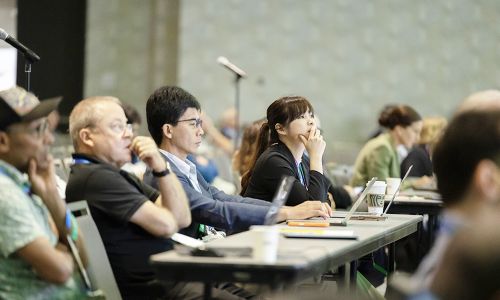
 The Optical Engineering plenary held 5 August at SPIE Optics + Photonics 2025 in San Diego, between 3-7 August, contributed both some ruggedness and a little sparkle to the week's proceedings. Ruggedness-or at least testing for it-was covered by plenary speaker Sara Karami of Ansys Inc, whose specific topic was structural thermal optical performance (STOP) analysis for high-power lasers and cube satellites.
Many optical systems are very sensitive to structural and thermal changes, she said, and they will not perform nor meet requirements once they are exposed to real environmental conditions. For time and cost efficiencies, that's something engineers want to know in advance.
It's necessary to "see the impacts of these structural and thermal changes on our optical performance in the design stage," Karami said. "And that way, we can optimize our system to work in all the realistic environmental conditions." For high-powered lasers used in manufacturing or anytime there is high radiation of a light source that would generate heat, it is necessary to know how that translates to optical elements.
For example, she said, it would change the gradient index of each element but there may also be structural effects on mirrors, for instance. "All of this would impact the focal point, the size of the beam that you would like to manufacture your devices. You won't be able to actually maintain that level of accuracy if you're not considering all of the effects in your system."
Testing for manufacturability
In STOP analysis with ANSYS' Optical Studio tool, "we're going from one surface to the second surface, and all the way to either the focal plane or image plane, whatever the system requires, and we can actually optimize our system and do a full tolerancing on our system to make sure it is manufacturable."
With additional tools, she said, optical engineers can define a specific beam profile and measure heat flux and heat generation data accumulated at the surface of each lens, and also inside the system at the volume level.
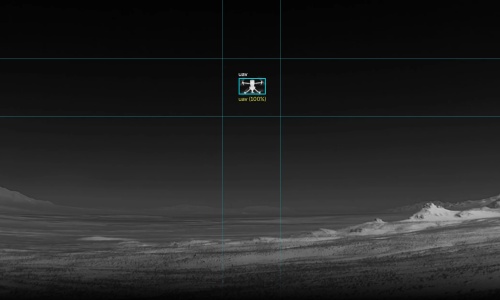
"Space-based telescopes have many different designs, but one thing is very common in all of them, they need to go through a rigorous simulation and design process," Karami noted. Space systems need to work in all environmental conditions, she noted. One of the main challenges for CubeSats is they also need to fit in a very small, compact space. "And when it comes to STOP analysis, we need to simulate in-orbit thermal conditions" as well.
The second plenary speaker, Tsung-Han Tsai of the Gemological Institute of America (GIA), brought the audience back down to Earth with a look at how optics and optical instruments can be used to examine gemstones to ensure transparency in the jewelry industry.
When someone submits a gemstone for identification, gemologists will examine several important factors including the type of gemstone, whether it was formed in the Earth or grown in a lab, and color origin and stability. Tsai noted that GIA is a nonprofit organization whose mission includes education about gemstones. Still, its identification and evaluation services still rely more on human expert analysis than scientific examinations.
But that is starting to change, he said, as the industry has faced new challenges like the advent of lab grown diamonds, which can mislead customers and devalue the natural diamond trade. Among important recent findings, he said, spectroscopic analysis has determined that 97% of natural diamonds contain a nitrogen vacancy center-lab grown diamonds do not.
With lower costs and the ability to do volume analysis, he said, spectroscopy and other analyses, for example studies of mineral luminescence, can lend transparency and trust to the greater than $100 billion global jewelry trade.
William G. Schulz is Editor in Chief of SPIE Photonics Focus.
Diffraqtion aims high with $10M for 'quantum' camera platform
September 01 2026