


Aalto University slows AMD progression with laser heating
Energy from laser source triggers healing response at cellular level, if temperature is controlled.
03 November 2025 Research & Development
 A project at Finland's Aalto University has demonstrated a possible new way to halt the progression of dry age-related macular degeneration (AMD) using laser treatment.
Published in Nature Communications, the procedure could offer a route to treating the disease in its early diagnosis phase.
The novel treatment approach aims to strengthen the protective mechanisms of affected cells using heat generated by exposure to laser light, and reversing the natural degradation processes associated with AMD.
"Cellular functionality and protective mechanisms weaken with age, which exposes the fundus at the back of the eye to intense oxidative stress," said Aalto's Ari Koskelainen.
"Free oxygen radicals damage proteins, which causes them to misfold and aggregate, then fatty protein deposits called drusen begin to accumulate, which is the main diagnostic criterion for the dry form of age-related macular degeneration."
The Aalto University method exploits the known responses of retinal pigment epithelium (RPE) cells to localized elevated temperatures. Death or degeneration of RPE cells, which provide the neural retina with nutrients and remove waste, is strongly associated with dry AMD.
Stresses caused by increased temperature can have a number of effects on these cells, but not all are damaging. If heat judiciously induces particular heat-shock proteins (HSPs) into action, then they can detect and refold some unfolded and misfolded proteins in response to the heat.
The critical factor is how to deliver the heat and control the temperature rise so as to avoid unwanted damage to surrounding tissue, and do so in a way suitable for ultimate use in clinical environments.
AMD treatment by local ophthalmologists
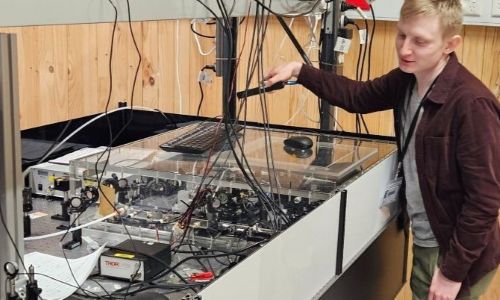
Aalto University's non-damaging retinal laser treatment uses focal electroretinography (fERG) to monitor the effects of laser exposure. An ERG examination involves recording the electric potential generated by retinal neurons through electrodes on the cornea or on skin nearby, responses which are strongly temperature-dependent.
Laser-induced increases in the retinal temperature can then be studied by watching how the kinetics of the fERG response varies. This means the temperature can be monitored at the same as the heating is carried out with near infrared light. commented Koskelainen, while harnessing the power of heat to trigger healing responses.
In trials on pig subjects, a spot in the fundus of the pig's eye was heated with a continuous wave near-IR laser for 60 seconds, to calibrate how the temperature rise related to irradiation. Results showed that if the temperature was kept to 44 degrees C, therapeutic effects including activation of antioxidant defense systems were initiated, while waste clearance from RPE cells increased.
An additional benefit of the laser treatment involves autophagy, in which a lipid membrane is built around the accumulations of misfolded proteins and begins to break down aged and damaged proteins. The team found that controlled heat shocks applied by the laser could also activate the beneficial autophagy process.
The method has been shown to work in mice and pigs, and patient trials will start in Finland in spring 2026. A spin-out company, Maculaser, will commercialize the technology.
"An optimistic schedule would see the method already being used in hospital eye clinics in as little as three years' time," commented Koskelainen. "The eventual goal is that it would be readily available at your local ophthalmologist."
Diffraqtion aims high with $10M for 'quantum' camera platform
September 01 2026