


Vermeer raises $10M for optical drone navigation
US-Ukraine startup's GPS-free technology already being used on the battlefield.
29 October 2025 Business News

Vermeer, a New York-based startup with significant operations in Ukraine, says it has raised $10 million in series A venture funding to scale its optical navigational technology platform for drones.
Already said to have been deployed by the Armed Forces of Ukraine (AFU), Vermeer's "visual positioning system" (VPS) enables drone navigation without conventional GPS - making the unmanned aerial vehicles immune to jamming and spoofing by Russia's opposition forces.
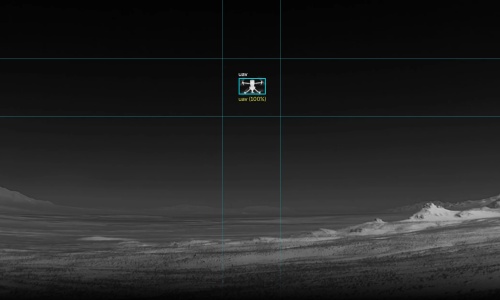
Instead of GPS and radiofrequency signals, Vermeer's approach relies on up to four infrared cameras, combined with thousands of hours of aerial video footage and Nvidia-powered AI technology.
It is said to work across all kinds of terrain, at day or night, providing navigation capability where GPS is either unavailable or disrupted, with Vermeer pursuing both military and commercial applications.
"Vermeer's VPS is a crucial navigation solution for drones and other aerial vehicles operating where GPS signals fail," states the startup.
"It effectively by-passes the vulnerabilities of satellite-based navigation, working seamlessly even when signals are jammed, disrupted, or intentionally spoofed with false location data."
Passive system
Founded by current CEO Brian Streem back in 2019, Vermeer emerged from the US Air Force Tech Stars accelerator program, where it won more than $7 million in SBIR awards and non-dilutive capital via the US government's "AFWERX" program to hone the VPS technology.
Because it is a passive system that does not rely on external signals, VPS is said to be exceptionally reliable in contested environments, and ideal for both defense missions and civilian aerial applications.
Vermeer says it has since partnered with the US Army, the US Air Force, Lockheed Martin, Northrop Grumman, and other defense organizations, as well as the AFU.
That success has seen its workforce quadruple to 40 employees over the past year, with eight of those people working in Ukraine.
"Building advanced technology in a war zone is not easy - but it's the only way to make it real," commented Streem. "Operating alongside our partners on the front lines has forced us to iterate faster, build smarter, and focus on what actually works in combat.
"Our goal isn't just to give drones mass - it's to give them precision, intelligence, and purpose. We're proud to have earned the trust of over 30 customers, and with the support of Draper, and our other venture partners, we're ready to scale that mission."
Dual-use tech
That refers to the early-stage venture capital firm Draper Associates, which led the series A investment alongside support from AeroX Ventures, Boscolo Intervest, High Point Ventures, Rockaway Ventures, and US Air Force Tech Stars.
Draper partner Andy Tang noted: "Dual-use tech catalyzes technical progress in both the defense and commercial sectors. And much of this innovation is already being deployed, to great success.
"One of the reasons we backed Vermeer is the incredible rate of success they've achieved specifically in helping Ukraine strengthen its drone fleet."
Tang also explained: "The Vermeer AI-based visual positioning system uses landmarks, stars, and other cues to help drones position themselves without needing GPS, which makes them more resilient and able to overcome jamming, spoofing, and other forms of technical attack.
"Their technology is changing the game for drone operations and their location accuracy. And it has innumerable applications outside of defense including for autonomous vehicles, remote delivery, and more."
Petr Šmíd, general partner at Rockaway Ventures, added: "Unlike GPS, Vermeer's system operates without radio signals and remains functional even when GPS is disrupted or non-existent. We believe this unique technology will become the standard for drones, robots, and other autonomous platforms, driving a new wave of autonomous systems."
Diffraqtion aims high with $10M for 'quantum' camera platform
September 01 2026