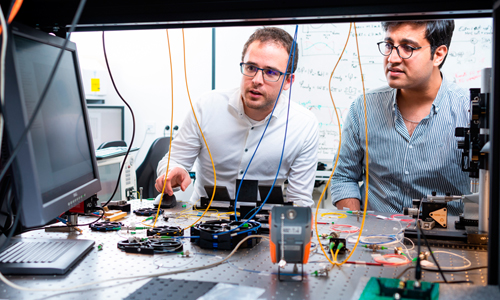



Zeiss Spectroscopy supports cement industry in reducing fossil fuel use
Dedicated spectroscopic gas analyzer to be presented at Global CemFuels Conference, in Geneva, in September.
19 August 2026
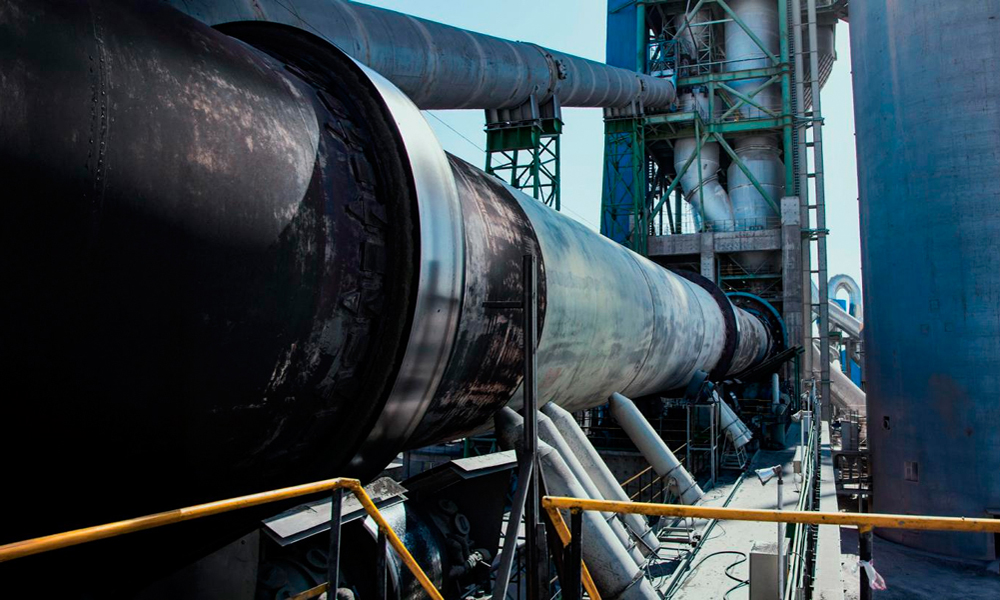
Cement plant featuring a rotary kiln. Credit: Zeiss / Alexey Rezvykh / stock.adobe.com
Zeiss Spectroscopy has launched Zeiss SPARC (Spectroscopic Process Analysis & RDF/SRF Control), an “inline solution” for quality control of alternative fuels in the notoriously polluting cement industry. The system, which is based on near infrared spectroscopic analysis of the combustion gases, will be first presented at the Global CemFuels Conference in Geneva on September 23 and 24, 2026.
Zeiss SPARC continuously determines the calorific value, moisture content and chlorine content of RDF (refuse-derived fuel) and SRF (solid recovered fuel) directly in the ongoing material flow. This provides the basis for data-driven fuel management, says the developer.
Process stability
As cement manufacturers increase the share of alternative fuels, they need to keep the combustion process in the rotary kiln stable despite fluctuating fuel quality. Variations in composition, moisture content or energy content can make combustion control more challenging. The new package provides real-time quality information for RDF and SRF. This enables faster process adjustments and can help stabilize the burning process.
“For cement plants, reliable insight into the quality of alternative fuels is essential for stable combustion control. With Zeiss SPARC, we bring near-infrared spectroscopy directly into the running process and provide relevant quality parameters such as calorific value, moisture content and chlorine content in real time. This transparency enables operators to respond more quickly to fluctuations and to further increase the use of alternative fuels within their process and plant conditions. In this way, Zeiss SPARC can help reduce the use of fossil fuels and support the decarbonization of a resource-intensive industry,” said Ria Sachse, Product Manager at Zeiss Spectroscopy.
Cement industry’s significant carbon footprint
The cement industry accounts for approximately eight percent of global CO₂ emissions. Producing clinker, an essential component of cement, requires very high and consistent temperatures as well as a stable flame. This is typically generated by burning fossil fuels, which causes substantial CO₂ emissions. To reduce emissions, cement manufacturers are increasingly using alternative fuels. This makes combustion control more demanding because the quality and composition of these fuels can vary significantly.
The idea for Zeiss SPARC originated in the Zeiss Group’s Green Business Challenge, an internal initiative to develop new, sustainable business models. Zeiss Spectroscopy turned the original concept into a market-ready solution for the cement industry. To achieve this, the proven Corona process and Corona extreme systems were tailored to the requirements of the cement industry and the use of RDF and SRF.

Singular launches programmable single-photon sensor
September 10 2026
EPFL enhances super-resolution imaging from single camera exposures
September 09 2026
Stuttgart-led group combines illumination and microscopy in fiber bundle
September 09 2026

ESA Earth observation mission FLEX set to launch on September 15th…
September 09 2026