


Photonics business round-up 12 November 2026
This week’s update features news about: Kopin’s expansion plans; RadianX raising $9 M to develop its perovskite PV; Opdo bringing AI into optical engineering; and Q.ANT and Ionos launching new photonic pilot line.
12 November 2026
Kopin expands Massachusetts footprint to advance microLED manufacturing
<pic> Kopincombo01M
<cap>Supported by a $1.46 M Investment Tax Credit from the Commonwealth of Massachusetts. Credit: Kopin.
Kopin, a developer of application-specific optical systems and high-performance microdisplays, has announced plans to expand with a new headquarters, which will support the company’s growing domestic manufacturing capabilities and could create up to 80 new jobs over the next five years. The firm, based in Westborough, Mass., said it expects to strengthen domestic manufacturing of microLED and optical technologies that address two growing needs: advanced displays for next-generation defense systems and more energy-efficient data connections for AI infrastructure.
“MicroLED is opening new possibilities in how soldiers and pilots see critical information and how AI systems move data,” said Michael Murray, CEO of Kopin. “Realizing that potential requires sustained investment in engineering talent, equipment and domestic manufacturing capacity. The Commonwealth’s support helps us build that capacity in Massachusetts, where Kopin has been innovating for more than 40 years.”
The expansion will support Kopin’s work to apply its microLED expertise across advanced defense displays and AI infrastructure. These programs include color microLED displays for next-generation soldier and pilot systems and Neural I/o™, an optical interconnect technology that uses microLEDs to transmit data through light. Neural I/o is designed to reduce the energy required to move data between AI processors, addressing a central challenge in scaling AI infrastructure.
Relocating headquarters functions to 75 North Drive will free additional space at Kopin’s existing 125 North Drive facility for manufacturing expansion and future production programs, with new roles to span engineering, advanced manufacturing, semiconductor processing, and other business functions.
The project is supported by an approximately $1.46 million Investment Tax Credit through the Commonwealth of Massachusetts’ Economic Development Incentive Program (EDIP), administered by the Massachusetts Office of Business Development, and an $800,000 grant through the Massachusetts Manufacturing Innovation Initiative (M2I2). The headquarters expansion will be implemented in phases, with facility improvements, equipment installation, and operational growth aligned with Kopin’s long-term business strategy.
RadianX Secures $9 M in financing for perovskite photovoltaics
<pic 2> PUTfacilityRadianX01M
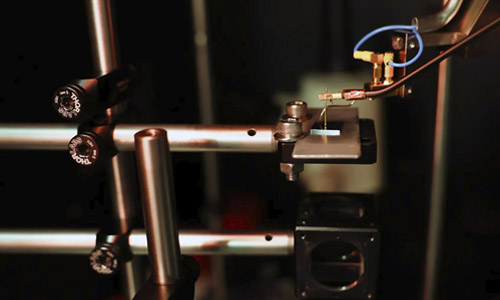
<cap 1>PUT’s facility, future home of RadianX’s dedicated perovskite production line. Credit: PUT.
RadianX, formerly operating as California Perovskite Technology, Inc., has announced $9 million in combined venture and project financing to scale production of its certified perovskite solar modules. Alongside the round, co-led by SOSV and Twynam, Pacific Union Technology Precision Manufacturing (PUT) is partnering to fund a dedicated production line for RadianX to support commercial-volume production of RadianX modules.
RadianX builds perovskite solar modules for edge energy, in applications such as sensors, wearables, connected devices and Physical AI. Perovskite can continue generating meaningful power in low and indoor light, where conventional silicon becomes less effective. Its modules are as thin as 0.7mm, available in custom sizes and output voltages, and designed to integrate directly into the surfaces of existing products.
“Most connected devices still depend on a battery that someone has to replace,” said Josh Douglas, Co-founder and Chief Operating Officer of RadianX. “Our job is to turn that light those devices already receive into power, to drive increased uptime and even reduce or eliminate the battery.”
Three problems have slowed perovskite’s move from research into commercial products. The material has historically degraded well before the end of a product’s life, its efficiency has not scaled from small cells into full-size modules, and its lead content has raised safety concerns. RadianX modules are among the world’s first perovskite modules certified by TÜV in all three categories of IEC TS 63163, including Category 3, the rating for products with high outdoor exposure.
“Perovskite is a nanomaterial that doesn’t depend on the silicon supply chain. It is carbon-light, needs no rare materials, and can be manufactured from start to finish in a single facility, which means it can be made almost anywhere,” said Vivian Qu, Co-founder and CEO of RadianX. “By building our first automated 6MW production line, we are creating a blueprint we can replicate at larger scale anywhere in the world.”
Opdo raises $2.3 M to bring AI into optical engineering
<pic 3> Opdosoftware01M
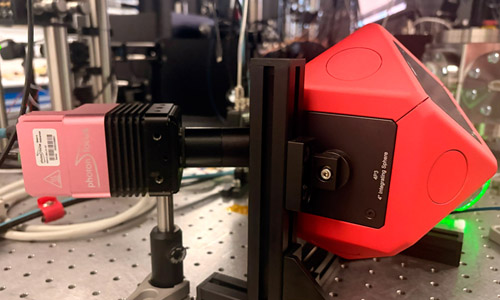
<cap>LA-based startup Opdo connects AI-driven optical design with real-world manufacturing data. Credit: Opdo.
Los Angeles-based Opdo, an AI-native optical engineering company, has raised $2.3 million in pre-seed funding to accelerate its ambition of automating optical engineering, from initial design to finished components. The startup is developing a “self-improving system” that connects AI-driven design and simulation with real-world manufacturing data, and has already demonstrated its ability to reduce end-to-end development and manufacturing cycles from months to weeks.
For more than a year, Opdo has worked alongside customers to design complex optical systems, combining AI agents with specialist engineering expertise. Its technology operates within established optical design software, including Zemax and CODE V, allowing engineers to accelerate their workflows without replacing existing tools. Opdo’s own engineers provide additional design expertise, and customers can also source prototypes and finished components through the company.
Opdo aims to overcome current constraints by that limit the design and manufacture of optical components connecting digital design with physical production. Data from manufactured and tested components can feed back into its AI models, improving subsequent designs and automating the journey from initial requirements to production-ready optical systems. Its customer projects already span laser and imaging systems, micro-optics and nanostructured surfaces.
“Every hardware team we talk to has an optics problem waiting in line. The engineers who can solve it are scarce, and the tools were built for a different era,” said Stephan Kuehr, co-founder and CEO of Opdo. “With AI doing the heavy lifting, our engineers have dramatically cut our customers’ time to market.”
The $2.3 million investment will help Opdo expand its engineering capabilities, develop its AI tooling and take on more customer projects. “Optics is one of the last deep engineering disciplines that AI has barely touched, yet it underpins some of the most important technologies being developed today,” said Jerry Dischler, Partner at investor Angular Ventures.
Q.ANT and Ionos launch photonic computing pilot
<pic 4> Q.ANTrack01M
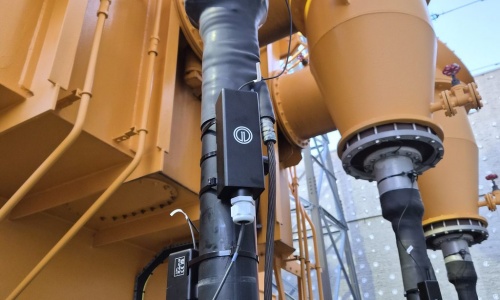
<cap>IONOS bare metal servers provide the foundation for companies, researchers, and developers to run AI models on Q.ANT’s photonic hardware. Credit: Q.ANT.
Q.ANT, a developer of commercial photonic computing, based in Stuttgart, Germany, has announced the launch of a joint pilot program with IONOS, a digitalization partner and cloud enabler for small and medium-sized businesses, to bring photonic computing to what they describes as “commercial bare metal server environments” for the first time.
The pilot program gives software developers the opportunity to test and evaluate their AI models on real photonic processors running in a bare metal infrastructure on dedicated hardware. This opens up a new way of computing: developers can build leaner AI models to run faster by making direct use of complex nonlinear mathematical functions.
Following the launch of Q.ANT’s open-source software development kit (SDK) in September, 2026, developers who could previously build and simulate applications only on the SDK can now, for the first time, run their workloads on physical photonic processors through IONOS’s bare metal infrastructure.
“Promising computing technologies from Europe need sovereign European infrastructure to make the leap into business use,” said Achim Weiss, CEO of IONOS. “In the pilot program, Q.ANT’s photonic processor runs in an IONOS data center under German jurisdiction. Users can explore processing with light on their own workloads. The results will show which applications benefit most and will feed directly into our future development work.”
Dr. Michael Förtsch, Founder and CEO of Q.ANT, added, “When we launched our SDK, developers could begin building applications for photonic computing. Now, with IONOS, they can take their work and run those applications on the real processor. This matters because the conversations around AI are shifting from what the models can do to what it costs to run them. Photonic computing can make the next generation of AI models leaner, resulting in less energy requirements for the same workloads.”
Through the IONOS website, approved applicants will gain access to Q.ANT’s second-generation Native Processing Unit (NPU) via a bare metal server in a German IONOS data center, where they can run and evaluate their own workloads with their own data and software.
Physical Sciences Inc helps surgeons identify nerves during surgery
November 12 2026
Optics11 secures €50M for expansion
November 11 2026


nLight still hampered by optics supply chain
November 10 2026