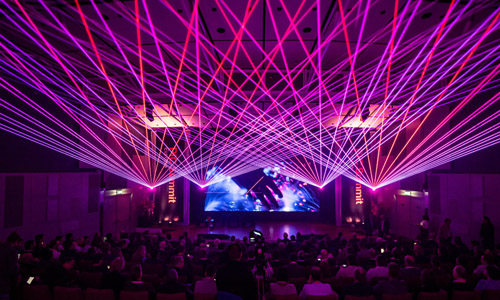
LZH presents its latest developments and insights in additive manufacturing
3D-printing demonstrations taking place at Formnext 2026, Frankfurt, through 22nd November.
18 November 2026
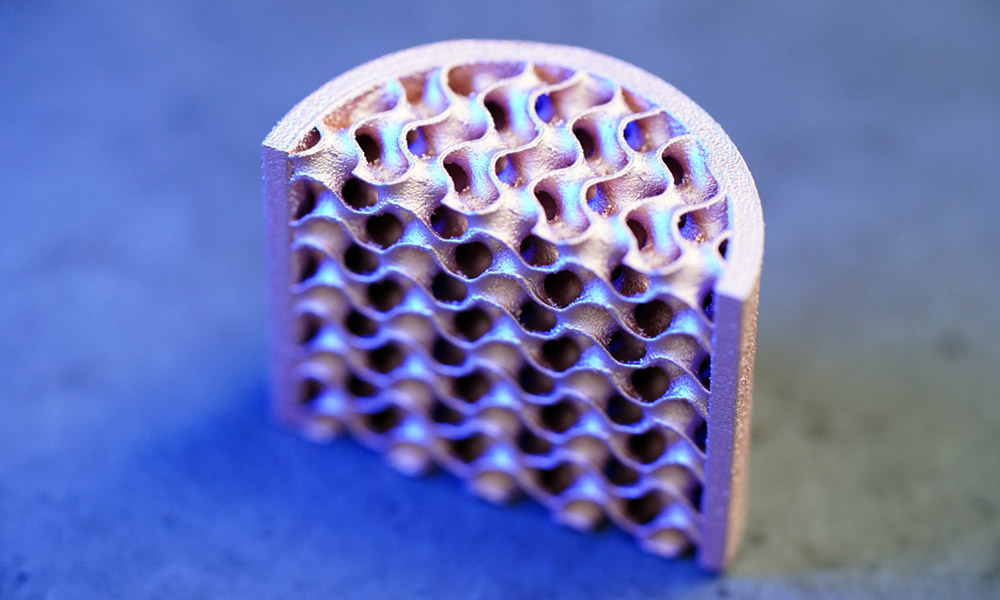
LZH is presenting a range of applications of 3D printing at this week’s Formnext expo, in Frankfurt. Photo: LZH.
Additive manufacturing can unlock what conventional processes often cannot deliver: complex geometries, integrated functions, and patient-specific solutions. At Formnext 2026, in Frankfurt, Germany, Laser Center Hannover (LZH) is this week demonstrating how these capabilities can be leveraged across a wide range of industries.
Copper, for example, offers excellent thermal and electrical conductivity, but poses significant processing challenges in 3D printing due to its high reflectivity and thermal conductivity. LZH is developing processes for the additive manufacturing (AM) of copper components, with potential applications in heat exchangers.
Equally promising – though equally challenging – is the AM of magnesium alloys: lightweight and biocompatible, this material is suitable for lightweight construction as well as medical implants. LZH is also working with novel steels that are specifically designed for 3D printing. These materials combine corrosion resistance with high hardness, enabling precision-tempered injection moulding tools with superior quality and extended service life.
Complex geometries
Beyond new materials, the LZH showcases advances in directed energy deposition (DED) using wire or powder. DED is particularly versatile: it enables both the additive manufacturing of large components and their repair. Using laser wire deposition, the LZH demonstrates reliable production of challenging geometries - exemplified by a complex impeller. A load-optimised gear wheel demonstrates how deposition welding delivers maximum performance with minimal material use.
Laser powder deposition offers significant potential for the energy, aerospace, and space sectors. A thin-walled combustion chamber with integrated, near-contour cooling channels exemplifies this potential. It demonstrates how complex high-performance components can be manufactured with optimised weight and efficiency. Real-world applications – including in medicine
In medical technology, 3D printing enables patient-specific solutions previously requiring labour-intensive manual fabrication. On display at Formnext: a custom-fitted seating orthosis (body support, such as a splint or prosthetic) made from plastic, demonstrating the efficiency gains of AM.
LZH offers solutions to current and future challenges with its smart photonics. Along the process chain, natural scientists and engineers work interdisciplinary together: from component development for specific laser systems or for quantum technologies to process developments for a wide variety of laser applications, for example for medical and agricultural technology or lightweight construction in the automotive sector. Eighteen successful spin-offs have emerged from the LZH to date.
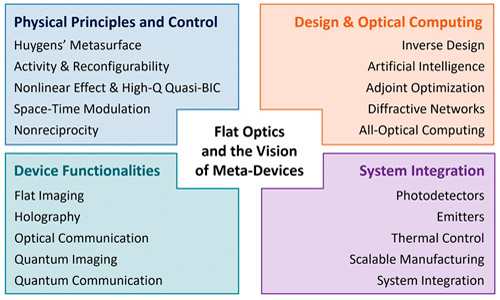
Innovations driving optical metadevices toward real-world deployment
November 18 2026
ams Osram sees AI photonics potential with thin-film VCSEL links
November 18 2026


Exosens signs massive night vision supply deal
November 17 2026