



Digital imaging business drives Teledyne uptick
Revenues up 8% year-on-year as defense-related sales of light sensors and infrared cameras rise.
23 April 2026
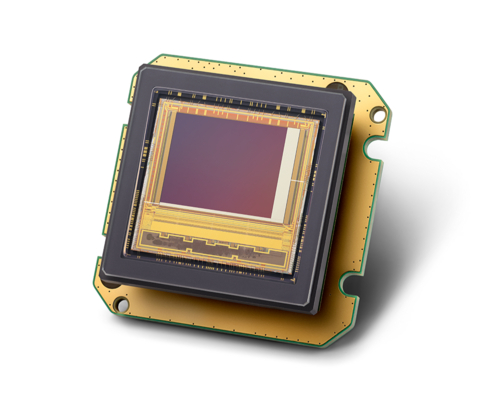
Teledyne, the industrial technology company at the forefront of infrared sensor and camera production, has posted sales revenues of $1.56 billion for the opening quarter of 2026, up nearly 8 per cent on the same time last year.
That increase was largely due to organic growth rather than recent acquisitions, and driven in particular by the California firm’s digital imaging business, which now accounts for more than half of company revenues.
The latest quarter also saw profits rise, with pre-tax income of $279 million up from $239 million this time last year, while Teledyne has reduced its debt burden with a repayment of $450 million this month.
Robert Mehrabian, the firm’s long-time executive chairman, commented: “Organic growth was strongest in our digital imaging segment, where infrared detectors and systems for space, airborne, marine and land applications, as well as complete unmanned aerial systems contributed significantly.
“Furthermore, our industrial imaging and X-ray businesses each returned to year-over-year growth.”
UAV momentum
Discussing the latest accounting period during an investor call, Mehrabian elaborated on the current momentum within Teledyne’s business, saying:
“Sales of visible light sensors, infrared detectors and specialty semiconductors for space applications, each increased at double-digit rates - as did FLIR infrared cameras for unmanned air vehicles, as well as our own complete unmanned aerial systems.”
He is also confident of strong future demand for those products following the significant depletion of the US munitions stockpile that has resulted from the bombardment of targets across Iran in recent weeks.
“We are already experiencing very strong defense orders across all of our portfolio from components to systems,” he told the investor call.
Discussing the various business segments in more detail, Teledyne COO George Bobb described growth across the digital imaging business as “well balanced” throughout the segment, noting solid demand for imaging sensors produced by the Teledyne, Delta, e2v, and FLIR subsidiaries.
“In the first quarter and early Q2, we received orders for infrared cameras and subsystems, totaling in the tens of millions of dollars for counter drone applications,” Bobb said.
Caiman debuts
In related news, Teledyne’s e2v business has just released a new imaging module designed for low-light imaging applications. Known as “Caiman”, and built around the firm’s “OnyxMax” CMOS sensor optimized for near-infrared wavelengths, it is said to combine high quantum efficiency with high spatial resolution and low-noise performance.
The module integrates image processing features, including automatic exposure control, noise filtering, histogram equalization, and binning, to ensure consistently high image quality.
“These capabilities make Caiman an ideal solution for night vision, surveillance, laser detection, and scientific imaging applications,” stated Teledyne. “Its CMOS technology ensures reliable performance in both daytime and nighttime conditions.”
The new module will be making its debut at next week’s SPIE Defense + Security conference and technology exhibition, which is set to take place at National Harbor, Maryland, from 26-30 April.


Laser weapons and battery welding aid IPG Photonics sales growth
November 04 2026

Rockefeller University microscope points to deeper brain imaging
November 04 2026

Europe-Japan group to industrialize flexible perovskite solar cells
November 03 2026