
Skip to the content

IOP A community website from IOP Publishing

Recently in Photonics West 2009 Category

The headline take

| | Comments (1) | TrackBacks (0)

By Joe McEntee, Group Editor

It's time to wrap up our Photonics West show blog for another year. Whether you made it to San Jose or not, we hope you found the reports from the conference and the trade show useful. To have your say on any of our Photonics West stories - or perhaps to highlight the significant developments that we inevitably missed - simply click on the commenting link at the start of each report.

For those of you in a hurry, here's our 60-second take on Photonics West 2009...

Technology push: as always, there was no shortage of new product launches at Photonics West. It seems that companies big and small are banking on creativity and innovation to navigate tough trading conditions in 2009-10.

How we got here: there's industry-wide recognition that the slowdown in laser sales is being caused by the global economic recession, not by any inherent weakness in the optics market.

Spread your bets: optics companies selling primarily into industrial materials processing applications are finding things tough. Vendors with more diversified target markets are talking up the opportunities in steadier sectors like biomedical, research, defence and solar.

Back to basics: with competition intensifying across the optics supply chain, vendors need to focus on the fundamentals - stuff like bulletproof customer service, fierce operational prioritization (i.e. concentrate on the stable markets, not the declining ones) and sustainable product innovation.

It's all about leads: the wider economy might be on its knees, but if the BiOS and Photonics West trade shows are any sort of guide then photonics is faring better than many tech sectors. Most exhibitors seemed genuinely pleased with the number of leads they were getting on the booths, but cautioned that "we'll have to see if they turn into real business".

Extreme customer support: "Here's what we can sell you" no longer cuts it (if it ever did). "What can we do for you?" is the opener that every customer wants to hear these days.

That's all for now. Our Photonics West blog will be back in business next January. See you in San Francisco.

By Susan Curtis, publisher, Optics & Laser Europe and optics.org

It's not every day you get to meet the inventor of the iconic CO2 industrial laser, so I was delighted to catch up with C Kumar Patel at the Pranalytica booth in the South Hall extension. Patel, who was awarded the US National Medal of Science back in 1996 for his invention of the CO2 laser, is now chairman and CEO of Pranalytica, a company formed in 2000 to develop and commercialize high-power quantum cascade lasers for applications in spectroscopy and infrared countermeasures.

The latest release from Pranalytica is a 2 W continuous wave QCL that operates at room temperature and emits at 4.6 µm. "It's the highest power QCL currently available on the market," claimed Patel - who demonstrated by using the laser to burn a hole in his business card. The turn-key laser system is intended particularly for countermeasures systems in commercial and military aircraft, where higher powers are crucial to make laser-based systems effective over longer distances.

The newest version of the laser delivers double the output power of the previous incarnation, but maintains the same nearly diffraction-limited beam quality at potentially a lower cost per watt. Several thousands hours of lab testing testifies to the system's long-term reliability, while the package is hermetically sealed for use in adverse environments. As well as infrared countermeasures, Patel said that the 2 W system could also benefit LIDAR and free-space optical communications systems.

By Joe McEntee, Group Editor

With well over 1000 companies exhibiting at the Photonics West trade show, any product round-up is necessarily going to be selective. Here are a few of the product innovations that caught my attention last week (apologies upfront to all those vendors that I've missed). You can also check out previous blog posts for more detailed coverage of new products from BaySpec, Osram, Chiral Photonics and plenty more.

Cobolt AB, the Swedish manufacturer of low-noise, diode-pumped solid-state (DPSS) lasers, was showcasing the Cobolt Zouk, a CW DPSS laser operating at a fixed wavelength of 355 nm and with an output power of 10 mW. The product is built into a compact and hermetically sealed package (80x60 mm footprint) using the company's proprietary HTCure technology. Cobolt claims that the Zouk provides a power-efficient alternative to the Ar/Kr-ion UV lines and quasi-CW UV lasers in demanding fluorescence applications like flow cytometry and confocal microscopy.

Alfalight (Madison, WI) was headlining with preliminary details of its surface-emitting DFB laser-diode technology. Advantages are said to include complete immunity to facet damage, on-chip integrated wavelength stabilization and intrinsically high brightness that eliminates the need for expensive, precision optical elements. Manoj Kanskar, vice-president of R&D at Alfalight, described the SE-DFB laser as "a breakthrough technology that will reach beyond the capabilities of bar-based optical sources and benefit fibre lasers, solid state lasers and direct-diode applications."

• BeamGage is the optics industry's "first beam-profiling software to be newly designed, from scratch, using the most advanced tools and technologies", claims Ophir-Spiricon (Logan, UT). The software is based on UltraCal, Ophir-Spiricon's patented baseline correction algorithm, which helped to establish the ISO 11146-3 standard for beam measurement accuracy. According to the specification sheet, BeamGage guarantees that the data baseline (zero-point reference) is accurate to one-eighth of a digital count on a pixel-by-pixel basis.

Koheras, Denmark, featured its BASIK Module single-frequency DFB fibre-laser system in a new rugged package with passive vibration reduction. Specifications include up to 40 mW output, wavelengths within the 1535-1575 nm band, plus an option for fast piezoelectric modulation. The BASIK Module is designed for applications in oil/gas exploration, perimeter and submarine detection, and wind LIDAR.

• The Chameleon Vision, a one-box laser source designed to "maximize the potential of multiphoton excitation microscopy", was among a raft of new product announcements from Coherent (Santa Clara, CA). A key feature is the high (47,000 fs2) group-velocity-dispersion (GVD) compensation, which means the laser can correct for the large GVD found in microscopes with many highly dispersive elements. The high output power (>2.5 W) means the laser can be optimized for both shallow and deep tissue imaging.

TOPTICA Photonics, Germany, says that its latest fibre-laser product - the iChrome - enables users to select a wavelength anywhere in the visible range, computer-controlled from 488-640 nm. The highly repetitive laser pulses exhibit 3 nm bandwidth and 3.5 ps pulse duration with an average fibre-coupled output power of more than 1.5 mW. The company has entered into a partnership agreement with Carl Zeiss to develop applications for the iChrome in fast laser scanning microscopy. Other possible applications include measurements of fluorescence lifetimes, pump-probe spectroscopy, excitation spectra characterization and optical component testing.

By Susan Curtis, publisher, Optics & Laser Europe magazine and optics.org

The economic downturn is making it even harder for start-up firms to raise investor cash, which makes it all the more impressive that Mobius Photonics has just closed a new round of financing worth some $20m. "It's been a very up and down process, but we now have enough backing to expand and to take us through our next development phase," said Laura Smoliar, CEO and founder of Mobius Photonics, when I spoke to her on the show floor.

At the heart of Mobius is a team of industry veterans from Quanta Ray and Lightwave Electronics, who are now putting their efforts into the development of high-power fibre-based lasers. The latest commercial release is an air-cooled laser system that delivers an average power of 10 W in the ultraviolet, and in a research paper presented at the conference the company demonstrated power scalability to 30 W at UV wavelengths.

Smoliar claims that the fibre-based system enables much greater flexibility than diode-pumped solid-state lasers in terms of output wavelength, pulse width and pulse timing. The same commercial system can produce 10 W in the UV, 18 W in green, and 30 W in the infrared, and offers independent control of the pulse repetition frequency (>200 kHz) and the pulse width (down to 2 ns) without any effect on the laser output.

The G1+ laser system is based on a pulsed master-oscillator, fiber-power-amplifier (MOFPA) architecture. A source module contains the master oscillator and a pre-amp, while a separate diode-based pump module powers the optical head.

According to Smoliar, the fibre-based system was developed with the microelectronics market in mind, and Mobius has patented a system architecture that enables high-throughput parallel processing for volume applications. In this case, a single source module is used to drive multiple pumps and optical outputs.

Given the current downturn in the semiconductor market, Mobius is keen to develop new applications for its innovative system. Target areas include supercontinuum generation, Ti:sapphire pumping, and medical therapy and manufacturing. Smoliar would be delighted to hear from any optics.org readers who have other potential applications for the system.

By Susan Curtis, publisher, Optics & Laser Europe magazine and optics.org

Neil Barrett (right) of Optima Research was one of optics.org's Golf Champions. Well done Neil!
Neil Barrett (right) of Optima Research was one of optics.org's golf champions. Well done Neil!

Competition was fierce in optics.org's first ever Golf Challenge, but three clear winners emerged. Our champions were: Thomas Meyer from the University of Southampton's Solar Energy Research Group, Neil Barrett of Optima Research Ltd (pictured here with optics.org sales exec Katrina Davis) and Amit Arora of Teksol Inc. The three winners each walked away with a bottle of Scotland's finest single-malt whisky, so no wonder Neil looks so pleased.

Thank you to everyone who took part. If you didn't, you might get another chance at LASER exhibition in Munich, Germany, later this year.

By Susan Curtis, publisher, Optics & Laser Europe and optics.org

Thursday 08.00 PT: Judging from the buzz at Texas Instruments' booth today, the company's latest DLP development kit for picoprojector applications is proving a hit with the Photonics West punters. TI is well known for its DLP optical switching technology, which uses an array of micromirrors to manipulate light emission, and its development kits allow scientists and engineers to incorporate the technology into their own optical systems.

According to TI's Arun Chhabra, the introduction of the development kits has driven the development of a whole new range of industrial and medical applications. DLP technology was originally conceived for use in displays, and indeed more than 18 million chipsets have been built into projector displays, digital cinema solutions and high-definition televisions. But photonics engineers have also been able to exploit the development kits to create systems for metrology, spectroscopy, and direct-image lithography - to name but a few.

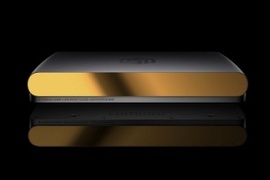
The latest iteration of the development kit targets the emerging market of picoprojectors, which are designed to be so small that they can be integrated into mobile phones and other handheld devices. The development kit incorporates a miniaturized version of the DLP chipset, with the complete kit measuring just 44.8x67.4x14.2 mm - about the size of a mobile phone.

The PicoProjector kit includes a red, green and blue LED, which together produce full-colour output with a brightness of 7 lm. It has also been designed to interface with BeagleBoard, an off-the-shelf processing platform that has become popular within the development community.

Chhabra says the PicoProjector developer kit currently retails for $349, while the BeagleBoard platform cost an extra $149. At that price point, he believes that developers will be keen to experiment with the capabilities of the miniaturized chipset, which in turn will lead to a whole new set of applications that haven't yet been considered.

By Marie Freebody, Technology Editor, Optics & Laser Europe magazine and optics.org

Thursday 08.00 PT: Photonics West sees plenty of new exhibitors every year and 2009 is no exception. Lithography specialist Nanoscribe is a case in point. According to CEO Martin Hermatschweiler, Nanoscribe was founded in 2007 as a spin-off from the Karlsruhe Institute of Technology (KIT), the federation of the Universität Karlsruhe (TH) and the Forschungszentrum Karlsruhe.

"We were at several other exhibitions last year such as CLEO/QELS, ASCB, Hannover Messe and some other minor exhibitions, but this is the first time Nanoscribe has come to Photonics West," he told optics.org.

The company develops and manufactures compact and easy-to-operate laser lithography systems, which allow for three-dimensional micro- and nanostructures in various commercially available photoresists.

"We use highly reliable and stable femtosecond fibre lasers," said Hermatschweiler. "This makes our laser lithography systems truly turn-key systems at an affordable price."

The laser writing technique is based on a nonlinear effect known as multiphoton polymerization. By tightly focusing the light of an ultrashort pulsed laser, the intensity is sufficiently high to cause a chemical and physical change in the photoresist. By moving the sample relative to the fixed focal position, arbitrary paths can be written into the material.

Another newcomer to Photonics West is Shasta Crystals, US. Founded in 2006, the company develops platform technology to produce small crystals of various materials. Gisele Maxwell, CEO and co-founder, says that the decision to attend the exhibition this year is to gain customer traction and advertise for the products that it is already making and that are ready to sell.

"Our current focus is nonlinear optical (NLO) crystals for the display markets such as televisions, miniature front projectors and cell phones," said Maxwell. "These NLO crystals are used as frequency doublers to make visible lasers and generate the three colours (red, green and blue) required by high-resolution display manufacturers."

By Marie Freebody, Technology Editor, Optics & Laser Europe magazine and optics.org

Osram intends to develop a range of red, green and blue emitters for projection applications.
Osram intends to develop a range of red, green and blue emitters for projection applications

Thursday 07.00 PT: Osram is showcasing its blue laser diode (pictured left) at its booth (#1883), the first in a line of blue, green and red laser diodes the company intends to develop for compact laser projection applications.

"We hope to be the first company to offer both green and blue laser diodes," said Sevugan Nagappan, Osram's product marketing manager of infrared laser products. "Our blue laser diode will be ready for volume production in April or May 2009 and we hope to offer a green version by the end of this year."

The 450 nm GaN blue laser diode delivers an output power of 50 mW with a threshold current of just 30 mW. "The low threshold means that the diode is very efficient," commented Nagappan. "The slope efficiency is around 0.9 W/A."

Perhaps the most crucial aspect is the laser diode's height. Standing at just 3.2 mm high, the blue diode is claimed to be the smallest to date, enabling it to be embedded into consumer products such as cell phones, digital media players, digital cameras and Netbooks.

"While the biggest market for our tiny light sources is in consumer projection devices, the blue laser is also suitable for automotive applications such as head-up displays and industrial line-scanning," concluded Nagappan.

By Marie Freebody, Technology Editor, Optics & Laser Europe magazine and optics.org

Chrial Photonics is developing a range of devices based on twisted glass optical fibres

Chiral Photonics, US, is putting a new twist on optical fibre design as I found out when I visited its booth today. According to Saul Felman, the company's business development manager, fabricating optical devices based on twisted glass optical fibres improves the fibre's transmission efficiency, robustness and ease of integration.

The company hopes that its manufacturing process, which is completely automated and scalable, will result in communications lasers that are a fraction of the cost and three times more efficient than today's semiconductor lasers.

"We are developing the first all-fibre high-power isolator which tackles some of the price and robustness issues challenging current high-power isolator designs," said Sheng Zhang, senior scientist at Chiral Photonics. "We are also developing chiral polymeric thin films which, for instance, would enable high-quality projection displays."

On display at the company's booth (#6810) is an optical fibre polarizer (pictured), which is claimed to be the only flexible version available on the market.

With around 30 patents for its chiral fibre structures, Chiral Photonics is certainly putting a new spin on in-fibre photonics.

By Joe McEntee, Group Editor

Wednesday 07.00 PT: There are war-time generals and there are peace-time generals. Right now, says Allan Kreutzer, vice-president of global sales at Edmund Optics, photonics companies needs their war-time generals more than ever.

More optics, more service, more technology is the message from Allan Kreutzer (left).
More optics, more service, more technology is the message from Allan Kreutzer (left)

"I started in the optics industry in 1969," he told optics.org. "I've been through six major recessions in optics and this one is absolutely unique."

When the market heads south, says Kreutzer, engineers and executives across the optics supply chain need to focus on the basics. For him, that means extreme customer support. "Everybody needs service. When business is down, they [the customers] can't afford anything less than perfect delivery."

Fierce operational prioritization is another priority for Kreutzer and his colleagues at Edmund. "When you look at the current economic climate, it's really just looking at what we've done and trying to do it better... keep it more focused on the industries that are doing well and where the opportunities are."

More optics, more service, more technology is Kreutzer's take-home message to companies exhibiting at Photonics West this week. "Don't deplete your inventory in bad times. Don't decrease your service. Don't decrease your sales. [Instead] intensify all of it, especially for those industries that really need it."

By Susan Curtis, publisher, Optics & Laser Europe magazine and optics.org

Tuesday 22.00 PT: Can you name a photonics company that has seen its revenues double in the last 12 months? BaySpec, exhibiting at booth #6355, claims to have achieved just that stellar performance by repurposing technology developed for the telecoms market for applications in near-infrared spectroscopy and optical coherence tomography.

BaySpec's Eric Bergles told me that the company's expertise originated in advanced modules for optical communications networks, notably optical channel monitors and erbium-doped fibre amplifiers for dense wavelength-division multiplexing (DWDM) systems. BaySpec still manufactures those modules, but is now also exploiting the same high-volume production processes to deliver low-cost spectral engines that offer the repeatability and reliability expected of commercial telecoms components.

One example is the company's near-infrared spectrometer, which Bergles claims is "an affordable, accurate and ruggedized Raman spectral device". The spectrometer exploits an all solid-state design: a transmissive volume phase grating is used to spectrally disperse the signal, and the diffracted field is then focused onto a highly sensitive InGaAs detector array.

With its compact footprint and price point of around $6000, Bergles believes that BaySpec's NIR spectrometer is a truly disruptive technology. And, given the number of people stopping at BaySpec's booth today, it seems that he may be right.

Solar hots up

| | Comments (0) | TrackBacks (0)

By Marie Freebody, Technology Editor, Optics & Laser Europe magazine and optics.org

Photovoltaics is the market everyone is talking about at Photonics West

Tuesday 15.30 PT: "Solar energy is on the cusp of reaching grid parity in the next few years and by 2011 gigawatt-scale solar production will be a reality," announced Eric Wesoff in today's hot topics discussion. Wesoff is senior analyst at Greentech Media and has spent his career following the growth and technology trends in the photovoltaic market.

Photovoltaic technology is enjoying high growth and substantial investment due to worldwide focus on the long-term importance of renewable energy. Today the market is valued at $20bn, and is predicted to grow at a rate of 30% per year. Even in the current economic climate, Wesoff expects the market to grow by 25% in 2009.

Many technical challenges remain, however, including efficiency, reliability, cost per watt and commercialization. "For example, a couple of years ago the cost per watt was around $10," commented Wesoff. "By 2011, this should fall to around 75 cents per watt, at which point things will start to become very interesting."

The photovoltaic market offers venture capitalists big opportunities to invest. In the last three years, around 200 new VC-funded companies were created, which some industry sceptics say resembles the telecoms bubble of the late nineties. Wesoff disagrees. "The key difference here is that there is a clear end-market for this product," he said.

Without a doubt, the solar market continues to be a major topic of discussion at Photonics West. Perhaps with President Obama's recent call to reduce US dependence on oil, the country is now in a position to pave the way to cleaner energy.

By Marie Freebody, Technology Editor, Optics & Laser Europe magazine and optics.org

Tuesday 10.00 PT: Visitors swamped the exhibition hall as soon as doors opened at 10am. I stopped by the Lockheed Martin Aculight booth (#1434) to speak to Rob Afzal, vice president of research and development, to find out about the company's latest pursuits.

A new thrust to the company's research is to combine the beams of multiple fibre lasers to create a single very high-power beam. The latest product, which is not yet available, is a high-power green laser based on frequency-converted laser technology.

"We are very excited about this product, which will probably be announced officially sometime next year," said Afzal. "Our green laser emits an average power of 70 W, at a repetition rate of 5 MHz. What's more, the device does not require water-cooling, resulting in a compact air-cooled system."

Applications that the company hopes to target with its high-power green laser range from medical and materials processing to military.

It's still too early to gauge the mood on the exhibition floor, but Afzal hopes that this show will be as successful as the BiOS exhibition, where he said the company was able to pick up many good quality leads. Watch this space.

By Marie Freebody, Technology Editor, Optics & Laser Europe magazine and optics.org

Mitsubishi's talk on green lasers for TVs attracted a big audience

Coming second in Time Magazine's Top 10 gadgets of 2008 is quite an achievement. But then so is developing the elusive, highly efficient compact green laser for the first laser-based commercial TV. It was little surprise then that seats were scarce in Mitsubishi Electric's invited talk delivered by one of the developers, Takayuki Yariagisawa.

Released in October, 2008, the company's ultrawide-colour-gamut, high-contrast HDTV has a staggering 65 inch screen with only a 255 mm depth and power consumption of just 135 W.

According to Yariagisawa, the red and blue laser light sources were already available, but a high-power green laser diode had yet to be invented. "For the red and blue sources we used a 640 nm AlGaInP laser diode developed for DVD writers and a 455 nm GaN LED developed for Blu-ray," he explained.

For the green laser diode, Yariagisawa and colleagues opted for a planar waveguide structure, since this approach offers the ability to scale up the power. Other advantages include efficient laser operation and high gain with high-density pumping. A thin waveguide is also insensitive to cavity loss compared with thicker waveguides.

The biggest problem facing the group was developing a compact and low-cost green laser diode. "We fabricated a thermal lens array with an Nd:YO4 planar waveguide," explained Yariagisawa. "To reduce the device cost, we introduced a new wafer process that is suitable for mass production."

The resulting laser measures just 2.25x1.2 cm and emits a maximum output power of 11.4 W at a pump laser diode power of 27 W. An optical efficiency of 42% and electrical efficiency of 21% is achieved.

By Joe McEntee, Group Editor

BiOS exhibitors talk the talk during the two-day show

Monday 23.00 PT: The wider economy might be in the toilet, but if the BiOS tradeshow is any sort of guide then biophotonics is faring better than many emerging tech sectors just now. With a robust 165 companies plying their wares over the weekend, the majority of exhibitors I encountered said they'd bagged some decent leads and that they were, as one attendee put it, "happy with the footfall". Job done.

By Marie Freebody, Technology Editor, Optics & Laser Europe magazine and optics.org

It seems that an ever-growing number of laser makers are turning their attention to the immense potential of fibre lasers. Ultrafast fibre-laser specialist IMRA America outlined just some of the reasons why these lasers have caught the imagination of the optics industry in a technical conference earlier today.

imra1.jpg
Delegates hear all about IMRA's ultrafast fibre lasers

According to Gyu Cheon, IMRA's vice president of technology development, ultrafast fibre lasers offer key advantages over solid-state lasers, such as simpler assembly, automated operation and longer lifetime. "However, there are improvements that still need to be made that currently limit the technology," said Cheon. "These include wavelength tunability over a broad range, extreme short pulse and energy emission."

To improve the technology, engineers at IMRA are focusing on two parameters that they consider to be the most important - intensity and dispersion management.

So watch this space for further developments in ultrafast fibre lasers from a company that seems intent on bringing the technology to a wide range of applications. "Ultrafast fibre lasers are very promising for real-world applications ranging from micromachining to particle deposition, from packaging of microelectronics to dermatology," concluded Cheon.

By Marie Freebody, Technology Editor, Optics & Laser Europe magazine and optics.org

It's my first visit to Photonics West and I find myself struck by the sheer scale of the event. Although the main exhibition doesn't kick off until tomorrow, there is still plenty on offer for visitors, including technical conferences, short courses and plenary sessions.

Delegates enjoy a break from the technical conference

A technical conference that caught my attention this morning was delivered by volume-holographic-grating (VHG) maker Ondax, US. In an invited talk, the company's CEO Christopher Moser explained how a simple laser-diode configuration leads to wavelength tuning over 2 nm with less than 10% laser power loss and 40% VHG diffraction efficiency.

The motivation for the new design was to lower packaging costs by achieving accurate alignment of the VHG for frequency-narrowing laser arrays, and to increase the reliability of the diode by relaxing the alignment tolerance of the VHG.

The novel set-up comprises a laser diode, collimating optics and the VHG. "By simply adding a highly reflective coating to the heat sink of the diode, the laser output can be reflected back into the laser cavity, which removes the angle dependency of the grating," said Moser. "Now the wavelength can be varied by changing the angle of the VHG."

So far, the company has achieved a tuning range from 974 to 976 nm by rotating the grating over an angle of 0-6 degrees.

By Susan Curtis, Publisher, Optics & Laser Europe magazine and optics.org

Monday 17.00 PT: The opening session at today's Laser & Photonics Marketplace Seminar left delegates in no doubt that the global economic crisis is now having a major impact on laser manufacturers. Before presenting his 2009 forecast, Steve Anderson, editor-in-chief of Laser Focus World, warned delegates that "there are a few bright spots, but there's more red ink than black".

What followed was unremitting bad news for laser makers. Anderson forecasts sharp declines for laser sales into both materials processing and optical storage applications, which together account for 55% of the total laser market. Telecoms will also be hit, but to a lesser extent than consumer-driven markets because investment in optical networks is still needed to support increased bandwidth demand.

Overall, Anderson predicts that revenues in the laser market will fall by 11% year-on-year, down from $7.12bn in 2008 to $6.33bn in 2009. But, given the events of the past couple of months, he cautioned that even that forecast could be optimistic.

Even more dismal is the outlook for manufacturers of industrial laser systems. David Belforte, editor-in-chief of Industrial Laser Solutions, acknowledged that his forecast, which was prepared back in November, has been rendered obsolete by recent events. His original predictions suggested that sales of industrial laser systems would fall by 6% in 2009, but he said that the market had seen a "precipitous decline" since the beginning of December. As a result, he now thinks that industrial laser makers will see revenues drop by 15% and "even up to 30% for some suppliers".

So far, so depressing. But Anderson highlighted a few areas where laser makers could expect some stability, if not outright growth. He expects sales of lasers for scientific R&D to remain flat at $181m, with extra funding expected for projects in clean energy, including photovoltaics and fusion reactors, as well as in sensors and bioimaging applications. Defence and security is viewed as another stable market, while Anderson also predicts that instrumentation and projection displays will hold steady.

And both Anderson and Belforte stressed that the market declines they are predicting have largely been caused by the global economic downturn, not any inherent weakness in the laser market.

"Lasers are an established technology, and no other technology exists to compete with them in the markets they serve," claimed Belforte. As a result, both Belforte and Anderson believe that the laser market will be quick to recover as and when market conditions improve. Belforte wouldn't be drawn on when that might happen, but let's all hope that it's sooner rather than later.

UPDATE Monday 1900 PT: While the forecasts spoke to the fear and corrosive pessimism mentioned by Joe McEntee in his entry Fear versus pragmatism, my conversations with other delegates revealed a greater tendency towards pragmatism and new opportunities. Companies developing innovative technologies for well defined markets seem more confident about the prospects for 2009, while Michael Lebby of the Optoelectronics Industry Development Association predicted that the market will rebound in 2010, if not later in 2009. Lebby urged optics companies to use 2009 as a time to focus on developing new technologies that could gain market traction in 2010, and believes that green photonics in particular will become a major market driver.

By Joe McEntee, Group Editor

Monday 12.00 PT: The immense potential of optical imaging in cancer diagnosis, screening and treatment is once again a prominent theme in the BiOS conference programme. A brief scan of the proceedings shows that in the laboratory, and increasingly in the clinic, optics-related research is proceeding apace on many fronts.

Scientists and clinicians are exploiting optical techniques in conjunction with established clinical modalities like computed tomography (CT) to evaluate parameters such as morphology, vasculature, blood flow and oxygenation in suspect tissue. Others are pairing optical tomography or spectroscopy with magnetic resonance imaging (MRI), another clinical mainstay, in order to differentiate benign from malignant lumps in the breast.

Meanwhile, significant efforts are also under way to apply optical imaging in therapeutic monitoring - evaluating the efficacy or otherwise of molecularly targeted therapies for cancer - and to better understand the disease states that exist post-therapy.

"Optical methods may be able to tell clinicians very early if chemotherapy is working," noted Albert Cerussi of the Beckman Laser Institute and Medical Clinic (Irvine, CA) in a session on multimodal imaging over the weekend.

Cerussi and his co-workers at Beckman and the University of California, Irvine, are working towards that goal. More specifically, they're pioneering a non-invasive, near-infrared technique called diffuse optical spectroscopic imaging (DOSI) to monitor the progress of neoadjuvant chemotherapy in breast cancer (chemotherapy given to patients prior to surgery/radiotherapy).

Ultimately, DOSI is all about early identification of resistance factors during treatment - information that can be used by oncologists to adapt the patient's treatment plan accordingly. Although it's early days, "DOSI offers a possible combination of convenience, cost-effectiveness and multimodal integration," Cerussi told delegates.

A multicentre clinical trial looks like the next step.

By Joe McEntee, Group Editor

Monday 09.00 PT: If disruptive innovation is your thing then the BiOS Hot Topics session can usually be relied upon to deliver one or two striking examples. For those who haven't had the pleasure, BiOS Hot Topics is a series of rapid-fire reviews by experts in their respective fields. The session is something of an institution, not least because of the warped timing (7 till 9.30 p.m. on conference Saturday) and more Powerpoint slides per minute than you're likely to encounter this side of anywhere.

Standing room only at the BiOS Hot Topics session

One of the stand-out presentations this time round was from Kishan Dholakia, a professor in the department of physics and astronomy at the University of St Andrews, UK. Dholakia and his colleagues are pioneering a laser-based technique called photoporation that enables DNA, proteins, nanoparticles or drugs to be loaded into individual cells (a process known as transfection).

Dholakia uses the analogy of an "optical syringe", in which the tightly focused beam from a blue/violet laser diode punches a temporary hole in the cell membrane through which the payload can be delivered. "Photoporation is now emerging as a powerful technique," he told delegates. "Novel light beams and optical control are making this ever more applicable."

What's significant about photoporation is its ability to perform selective transfection (i.e. on a cell-by-cell basis, so that only cells of interest are treated in a mixed population). That's a big deal in cell biology and biopharmaceuticals R&D because traditional chemical, viral and electroporation methods lack this selectivity and are only able to transfect all cells in a given sample.

It gets better. The blue/violet laser diode and optical delivery system are relatively cheap and compact. The set-up is also scalable - for example, spatial light modulators could ultimately be integrated into an automated instrument to create beam arrays to porate many cells of interest at once.

Dholakia and his colleagues recently filed a patent application on their technique with the US Patent and Trademark Office: "Blue laser diodes are easy to use and relatively inexpensive," notes the filing. "Using these opens the door to allow photoporation to move from academic study into the realm of practical devices. In particular, conventional microscopes could be readily adapted to include a blue laser diode photoporation system, thereby allowing this technology to become widely accessible."

Today's fundamental science, tomorrow's growth opportunity.

By Joe McEntee, Group Editor

Sunday 11.00 PT: It was already big, but SPIE's Biomedical Optics Symposium (BiOS) just got bigger. By the end of this week, more than 1600 BiOS papers (up from around 1300 last year) will have been presented across 38 conference tracks spanning everything from photonics in dermatology and plastic surgery to frontiers in pathogen detection.

A buzz with BiOS: Conference attendees discuss today's presentations

Your correspondent's necessarily selective take on this sprawling brief began yesterday with a dedicated session on mechanisms for low-light-level therapy. I went along to hear an invited paper from Patricia Trimmer, associate professor of research, neurology, at the University of Virginia (Charlottesville, VA), reporting on promising early-stage work to evaluate the potential of light therapy in the treatment of Parkinson's disease.

Parkinson's is a progressive, disabling neurodegenerative disease characterized by a number of primary symptoms, including muscle tremors and rigidity, bladder dysfunction and sleep disorders. Currently, the disease afflicts around 1.5 million patients in the US - equivalent to 1-2% of the population over the age of 65 - and incurs healthcare costs of around $25 billion annually.

By way of context, Trimmer pointed out that numerous developmental Parkinson's drugs based on efficacy in animal models have proved largely ineffective in human trials. Put simply, animals don't model what's happening in humans.

At the biological level, dysfunction in a key cellular component called the mitochondrion (the cell's engine room) is a feature of different forms of Parkinson's. That dysfunction manifests in altered mitochondrial morphology, reduced oxygen utilization and reduced mobility/transport around the cell.

Trimmer, along with co-workers at the University of Virginia, Tel-Aviv University (Israel) and the US company PhotoThera, reckon there's a line of enquiry worth pursuing here. In terms of specifics, they're interested in the application of light therapy to improve mitochondrial dysfunction in cell lines exhibiting Parkinson's.

Using an 810 nm laser diode (50 mW/cm2 for a total of 2 J) for their in vitro studies, the researchers have been able to normalize the movement of mitochondria and improve oxygen utilization in many, but not all, of the Parkinson's cell lines under study.

It's early days, concluded Trimmer, but "our results thus far suggest that light therapy has the potential to become a new treatment for Parkinson's disease and other neurodegenerative diseases".

Another invited paper, presented by Mary Dyson, emeritus reader in the biology of tissue repair at King's College London, UK, explored the fundamental cell biology of accelerated wound healing induced by photon absorption.

Wound healing can be modulated, says Dyson, following the absorption of photons by cells resident in, or in transit through, the skin at and around a wound site. "Phototherapy produces cellular effects that are responsible for clinical effects," she told delegates. "[What's more], photons can affect indirectly cells beyond their reach."

A key feature of such treatments is the amplification of photon-absorption effects, which in turn increases the range and duration of phototherapy. Dyson noted that "amplification may be initiated in cells that have not absorbed photons by regulatory proteins secreted by cells that have absorbed photons". Amplification may also be due to changes induced by photons in immune cells and stem cells in transit through the skin's capillaries.

By Joe McEntee, Group Editor

Saturday 14.00 PT: The latest issue of The Economist made for grim reading on the flight in from London yesterday. "When the financial system fails, everyone suffers. Over the past 22 months the shock has spread from American housing, sector by sector, economy by economy. Some markets have seized up; others are being pounded by volatility. Everywhere good businesses are going bankrupt and jobs are being destroyed."

Against that backdrop of global economic instability, Photonics West assumes even greater significance than usual for companies at all levels of the optics supply chain. How things play out over the next few days - in the sales conversations on the exhibition booths, the keynote presentations from senior executives, also the background gossip in the coffee bars - will go a long way to shaping the sentiments of vendors big and small for the next 12 months.

Fear and corrosive pessimism or pragmatism and new opportunities? We'll know soon enough which turn out to be the dominant themes of Photonics West 2009.

By Susan Curtis, Publisher, Optics&Laser Europe magazine and optics.org

Photonics West is often viewed as a barometer of the optics industry, and this year all eyes will be on the San Jose Convention Center to see how the wider economic gloom is affecting the photonics sector. As ever, the optics.org editorial team will be reporting directly from the show floor, and we'll be finding out first-hand how exhibitors are coping with the sudden decline in the global economy.

We'll be kicking off the blog in earnest at the weekend, when the BiOS conference and exhibition will be offering delegates a unique insight into the use of photonics in biology and medicine. After that, remember to check back here for regular postings from our editors at the main Photonics West event. Bookmark this page now.

If you're at the show, make sure you visit the optics.org team at booth 1437. As an added incentive, this year we will be hosting the Optics Golf Challenge, a game of skill in which players must try to putt three holes in one. The highest scorers each day will have the chance to win a bottle of whisky, the title of "Optics Champion" and the respect of their peers. We hope to see you there.

More content

You can find more content in the blog’s main index or archives.

Alternatively you can browse posts for this category archived by month: